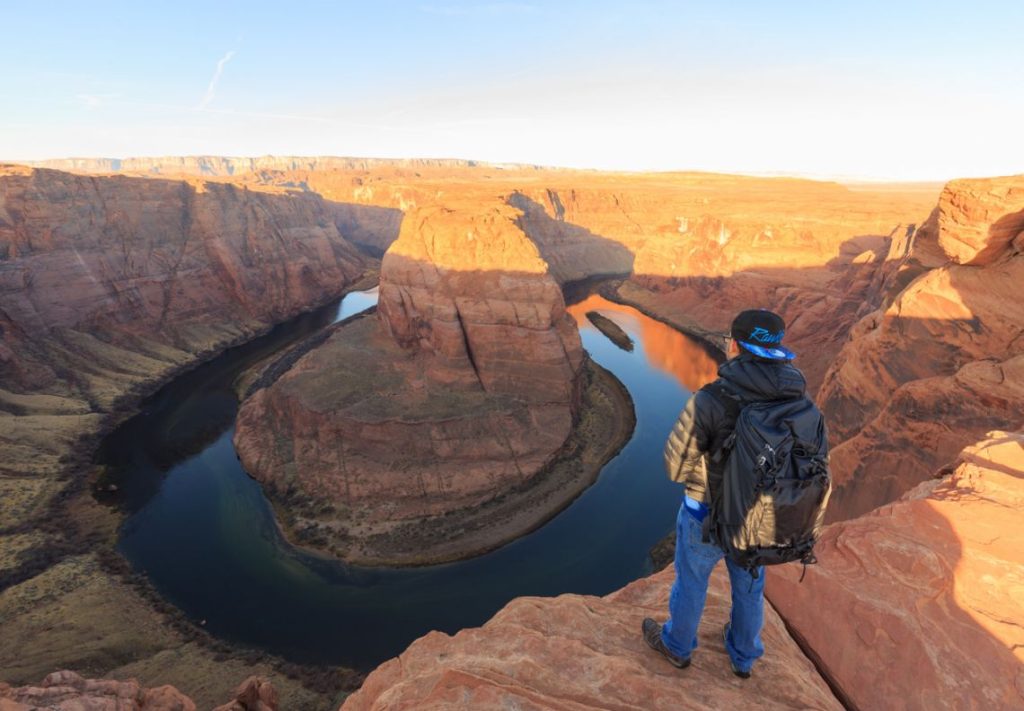
Customer Nelson Perez from South Florida got in touch to let us know how he uses his Ajna. Nelson graduated school as a graphic designer, then realized that he had a growing passion for photography. Working in the airline industry as a ground ops agent opened up the opportunity for discouted travel benefits. Since then, he's been bitten by the travel bug, always with his camera ready to capture each new journey, like this exploration of Arizona:
Words and photos by Nelson Perez
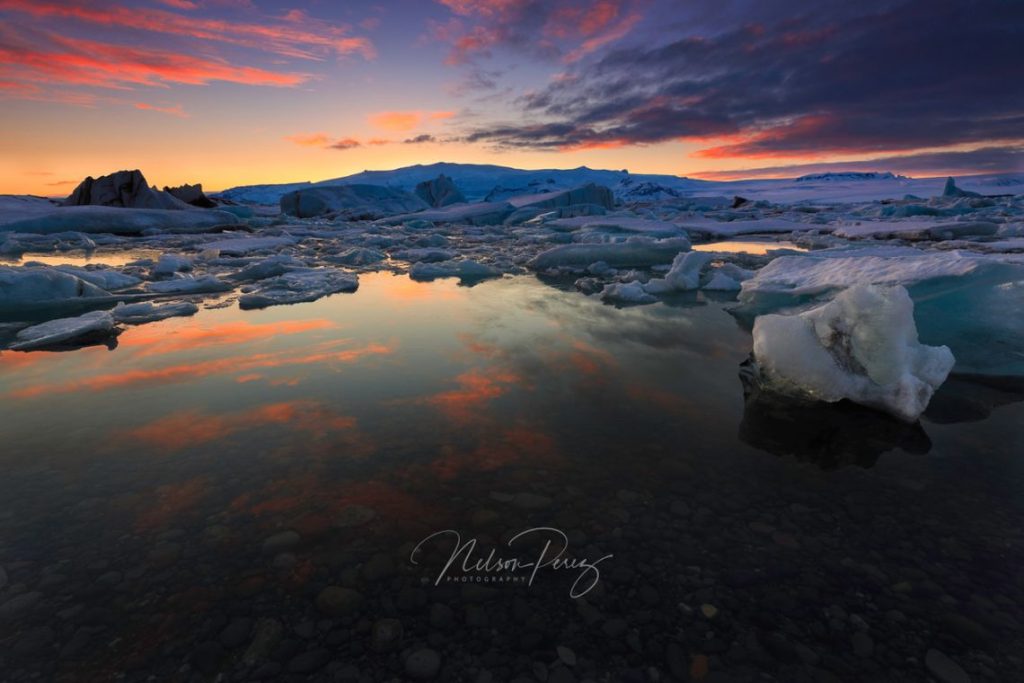
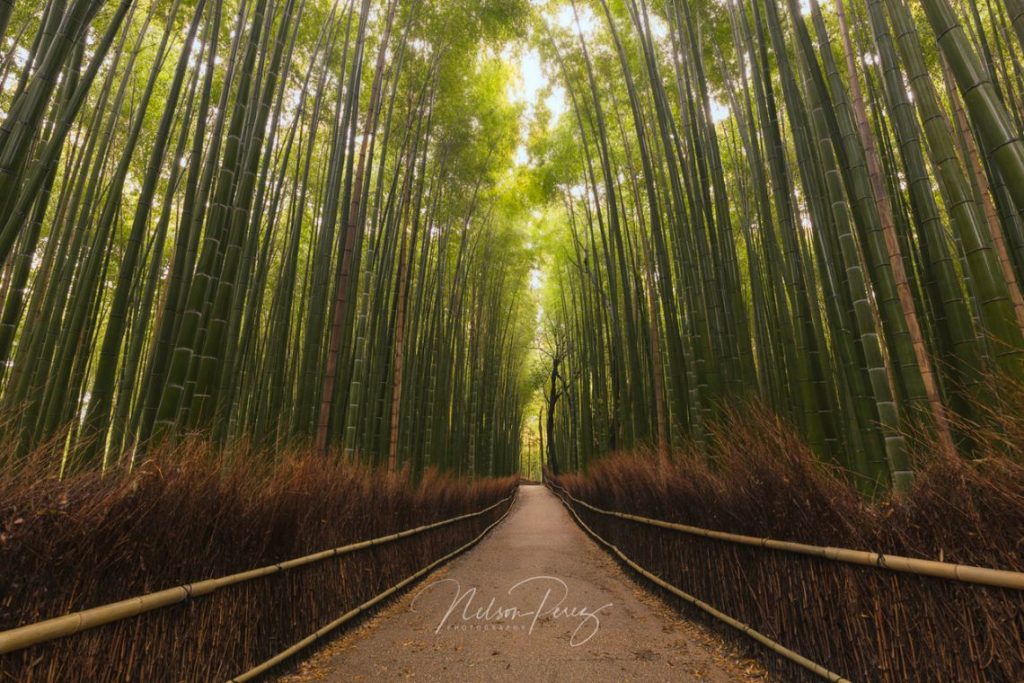
For the last three years, I have journeyed religiously with my wife, Erika, Capturing breathtaking photos nature has to offer. Like any other photographer, I’ve used a variety of camera bags in the past. Recently, I’ve searching for a bag that is both comfortable & spacious enough to hold all my equipment.
Last December my wife surprised with just that, The f-stop Ajna, Is a unique bag, Very different from my other ones. I didn’t know anything about the ICU compartment, Or about f-stop in general, Therefore I was very skeptical at first. After familiarizing myself with the bag, I realized that I can now travel comfortably & often with all my gear.


In January, my wife & I went to Arizona - I’m sorry - the beautiful state of Arizona. We explored Monument Valley, Antelope Canyon, Horseshoe Bend & Sedona. We survived the early mist & the cold, the dust & humidity of the canyons. I was blown away by the Ajna bag, All the gear it holds, The clever design & most importantly the protection & security.
I cannot be happier with my new bag & hope to continue exploring new & exciting places in the near future with this bag, Here are just a few of the many photos I’ve taken in Arizona.


You can find more of Nelson's work on his website, Facebook or Instagram channel.
"We Are f-stop" is for all f-stop users to share their stories from the field, from small daily adventures to epic travels. Contact us with your story on Facebook or drop us an email to [email protected] and let us know where your photography takes you and your f-stop pack!
SHOP ALL GEAR MORE WE ARE f-stop


©2022 F-stop
f-stop Ambassador Alexandre Gendron visited us in Portugal during our Pro Hangout. While he was with us, he walked us through his travel setup, using his AJNA 37L DuraDiamond®. Read more below about the tips and tricks that make his life as a working professional easier!
"When it comes to packing and organizing for any photo shoot, whether it is real estate, adventure, or travel photography, I believe in thorough preparation and attention to detail. Firstly, I have my checklists for all the necessary equipment, depending on what I will be shooting. This ensures I have my key equipment, such as camera body, lenses, tripod, spare batteries, memory cards, and any other specific gear required for the shoot.
I prioritize lightweight and versatile gear for adventure and travel photography that can withstand various weather conditions and rugged environments. In terms of physical organization, I use my f-stop AJNA for shorter trips, or my Tilopa for longer journeys with the Medium Slope - Camera Insert to safely store and transport my gear. This ensures everything is easily accessible and protected from any potential damage." - Alex Gendron

To organize and prep for a shoot, I have three top tips and tricks that could enhance your travel experience.
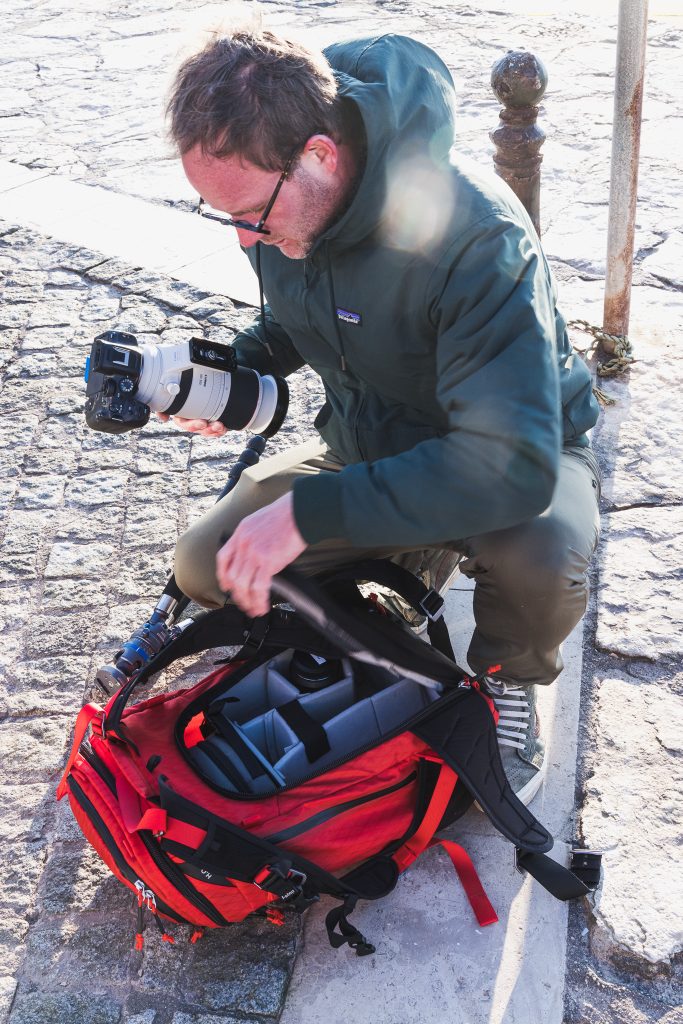
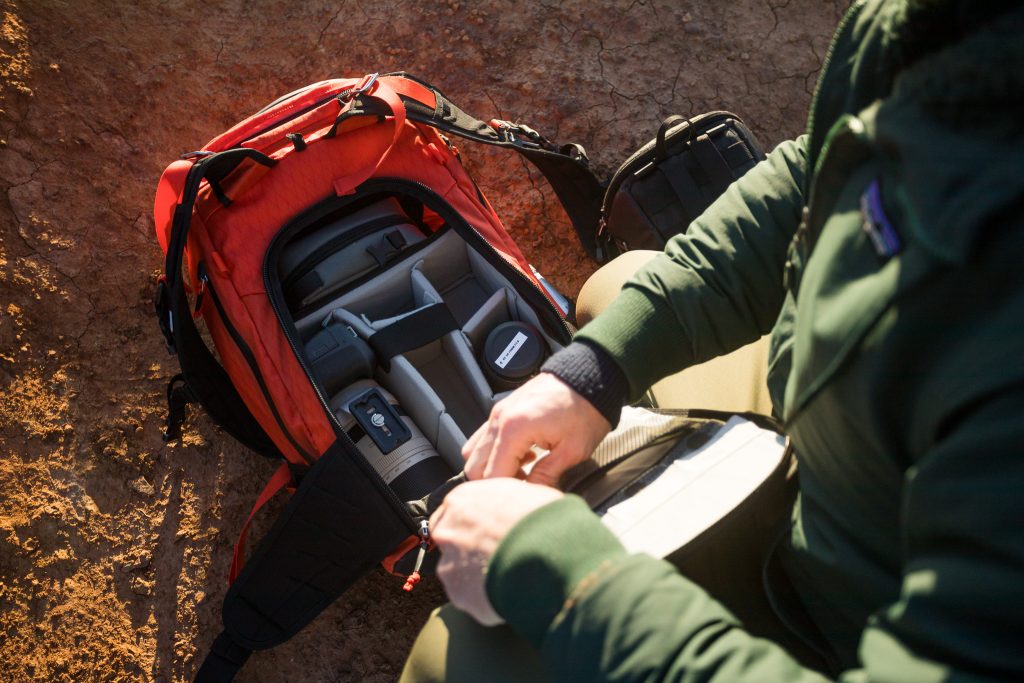

Alex's equipment consists of the Ajna 37 L DuraDiamond® (Magma Red) along with the Medium Slope Camera Insert.
He shoots with the Canon EOS R5 and R7 bodies, the Canon RF 15-35mm f2.8, Canon RF 24-70mm f2.8, Canon RF 100mm macro f2.8 and the Canon RF 100-500mm f4.5-7.1 lenses.
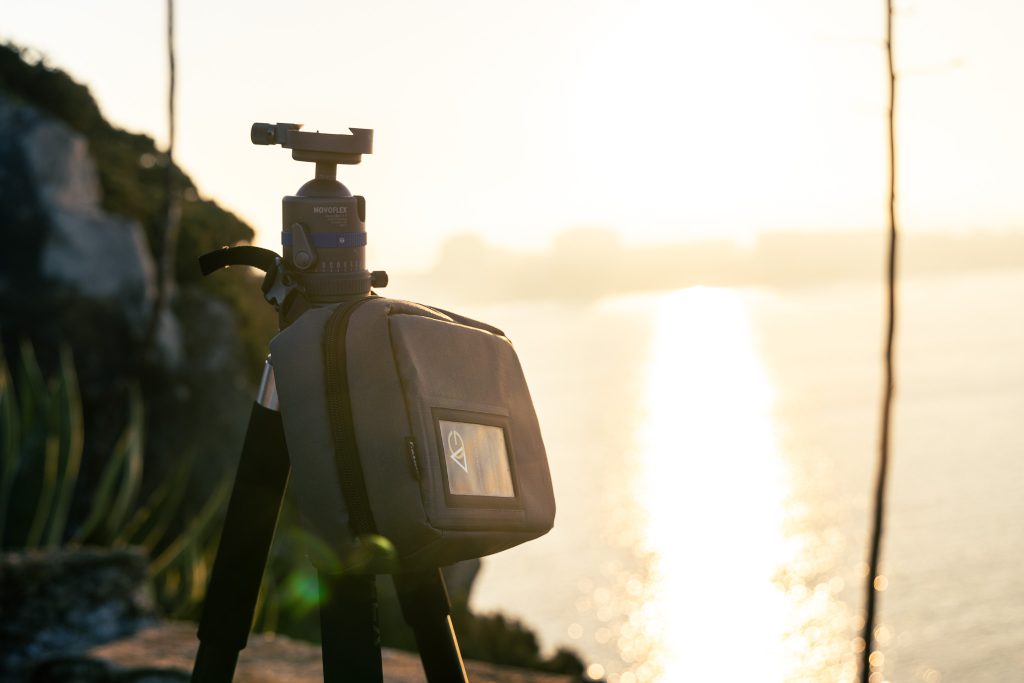
The additional gear he carries when needed includes his Binoculars for wildlife (vortex 10x42), a Drone (DJI Air 2s and DJI Air 3), and a tripod which is attached to the outside of the pack. For overnight trips, he uses an insulated mattress (thermarest Neoair Xtherm) and a sleeping bag. In our video, Alex has brought his travel kit, consisting of the Canon EOS R5 with the Canon RF 24-70mm and the Canon RF 15-35mm.
He uses the f-stop Filter Case with his K&F Filter kit ( ND and Graduated ND filters) and sees his Navin Pouch DuraDiamond® as a must-have for hiking.
Alex also uses the Tilopa 50L and occasionally the Sukha 70L along with his Pro Large Camera Insert. His main setup is the Pro Small Camera Insert or the Medium Slope - Camera Insert paired with either his Ajna 37L or his Tilopa 50L backpacks.
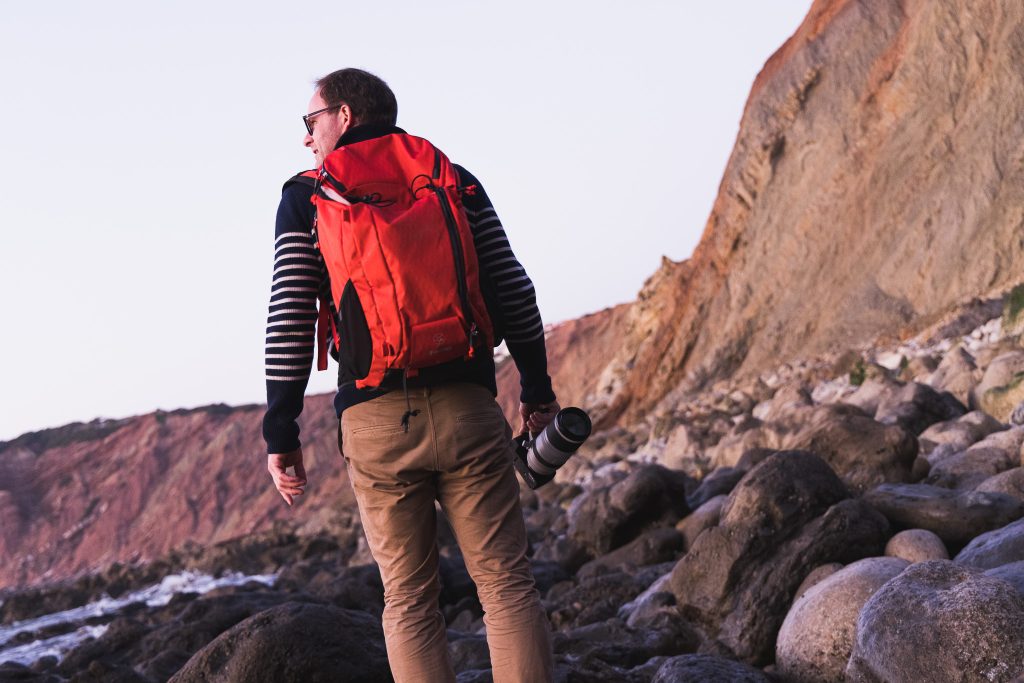
As a professional photographer for more than ten years, Alexandre has a taste for adventure and the great outdoors. In 2013, he left Paris for Australia, where he honed his skills as a photographer.
Seeking new challenges and adventure, he returned to Europe in 2016 by bicycle. He cycled 14000 km and travelled a further 8000 km, mostly on sailing boats, hitch-hiking from marinas and boat yards, to Vietnam where he ended his bike trip and trained to become a yoga teacher. He then travelled through France, Italy and Switzerland by van, before returning home.
He now teaches photography and explores the natural spaces of the Annecy region. His work has a refined style that often emanates a mystical ambience.

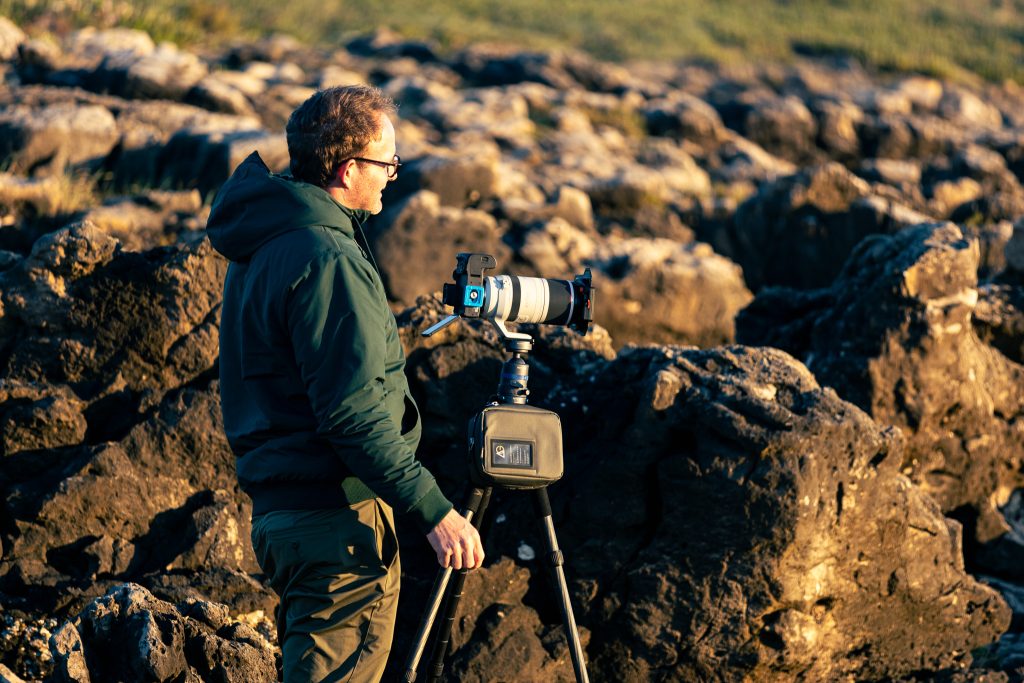


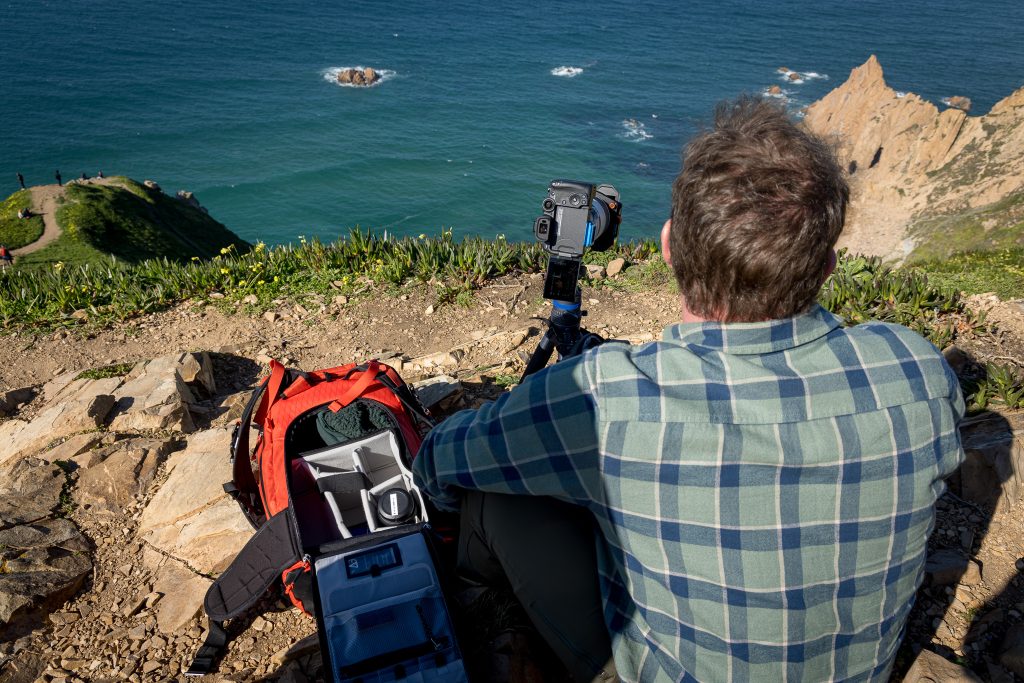

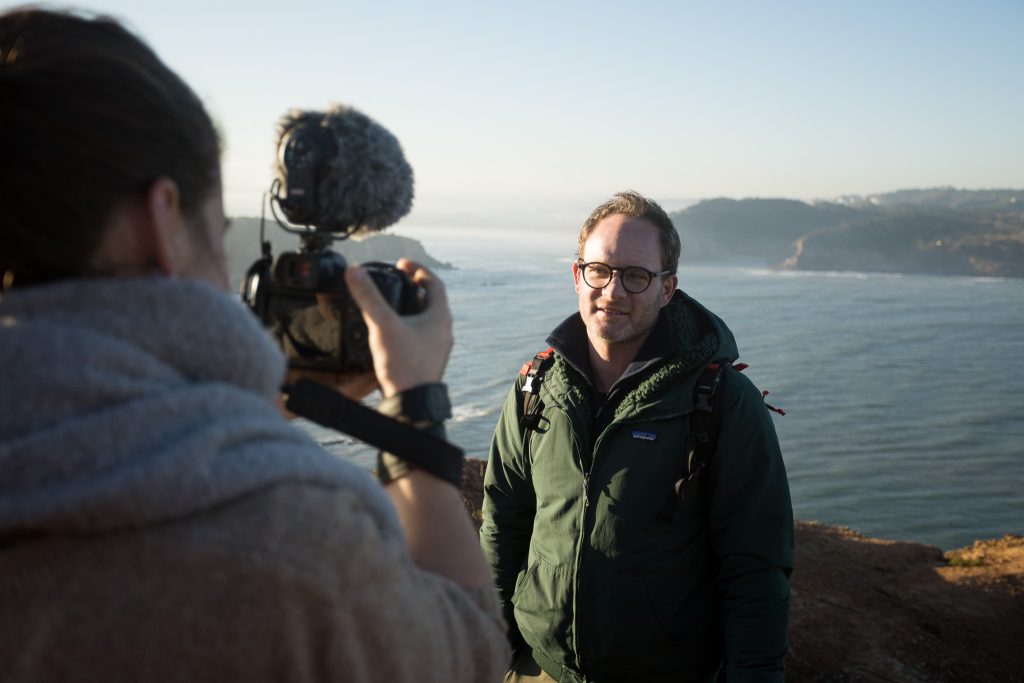

Everything is constantly moving and changing. When you are always transitioning from one assignment to the next, life can be hectic. Saving space, distributing weight, and planning ahead for a day in the field are all essential considerations when you are on the go. Join us as our Ambassadors share tips and tricks they have learned over years of traveling, with Life on the Dāsh.


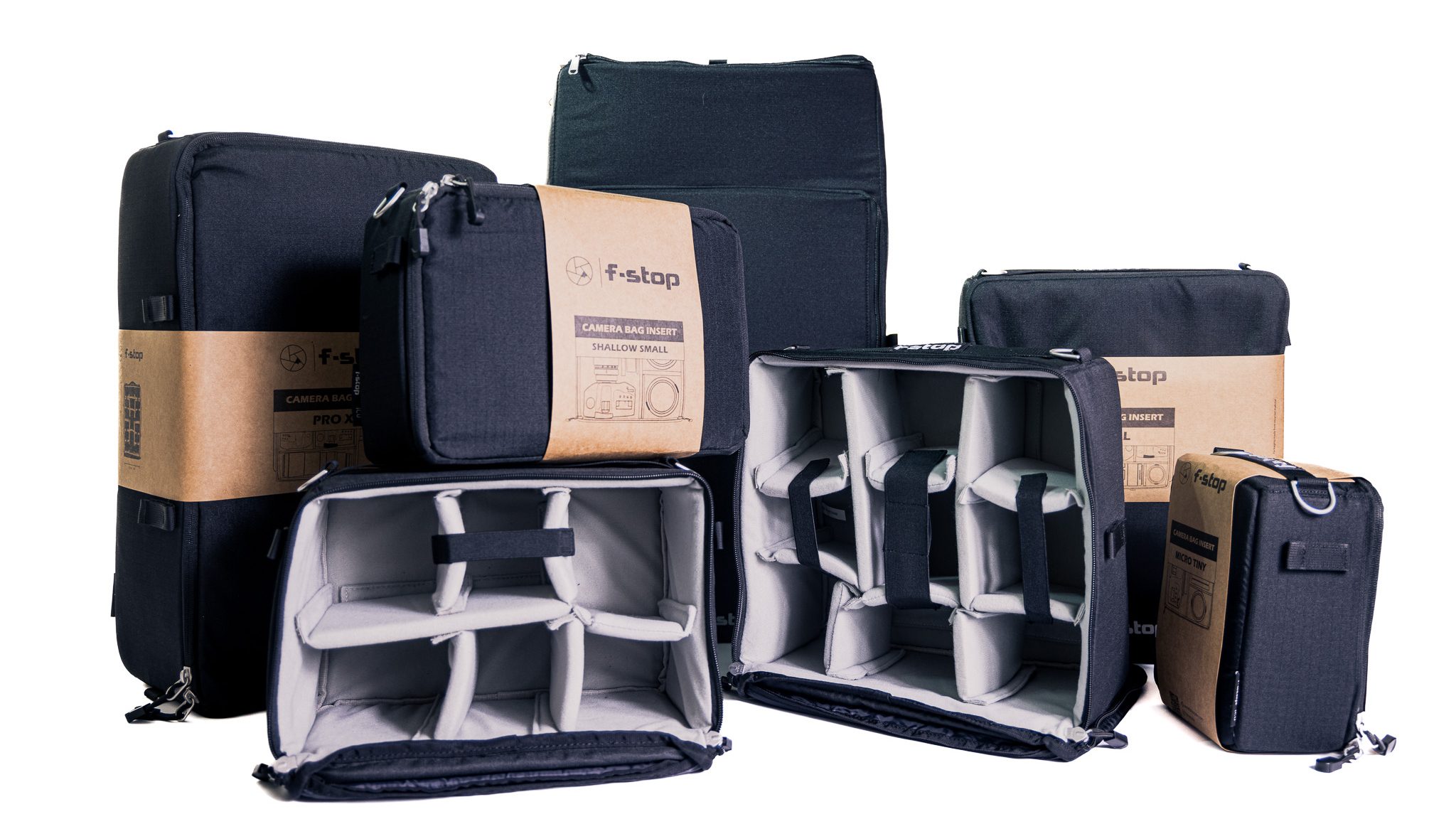
At the heart of each f-stop backpack is the Internal Camera Unit (ICU). Designed to give you ultimate flexibility and ease when packing your camera kit, our range of ICUs (camera inserts) let you mix and match different ICUs to different packs for every adventure. This ICU size guide shows you which ICUs fit each backpack, so you can get the right one for your needs.
Click on the backpack name to see how each ICU fits!
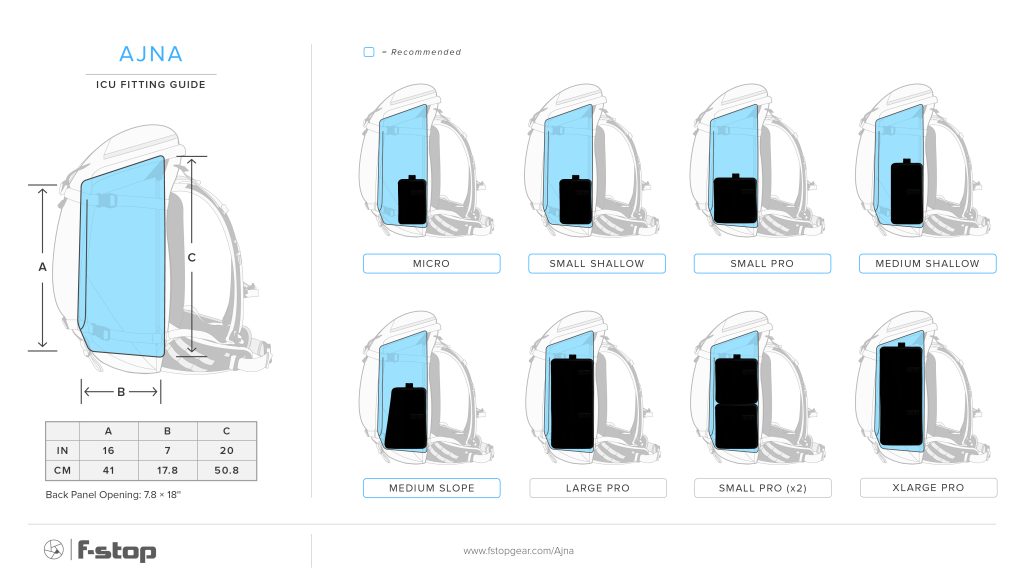

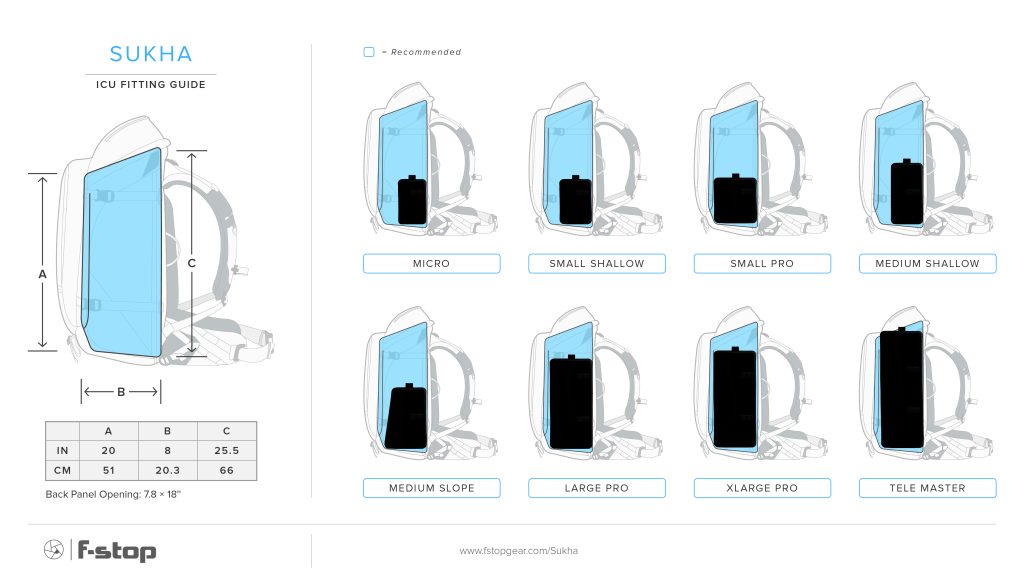

(Coming soon)


As you can see, each f-stop backpack can hold a variety of ICUs as well as drone/tech pouches, packing cells, and more. When choosing your backpack/ICU combinations, you'll want to consider the following:
Not every pack is compatible or recommended to go with each Camera Insert. For instance, the Shinn 80 L is designed to accommodate large camera/video equipment. To fulfill this purpose, both the pack as well as the Cine Master insert have greater depth compared to other packs. The Master Cine ICU is significantly deeper than the Pro XL ICU. Therefore, when you are using an XL Camera insert it will not fill out the pack fully.
To avoid any movement of the camera insert in the pack, you should attach it to the side attachment loops inside each backpack (next to the aluminium frame). Learn how to insert and adjust your ICU in your pack (video guide).
Want to make the most of the space in your f-stop backpack? Check out our guide to stacking and hatch-backing.
Stephen Jones is a photographer, storyteller, and traveler with a deep love for adventure and anything water related. As a kid growing up in Southern California, just north of Los Angeles, Stephen spent most of his days surfing in Ventura or mountain biking in the mountains around his home. After graduating from UC Santa Cruz in 2021, Stephen has worked with a number of brands in the outdoor and fashion industry, including Jansport, GoWesty, and Indah Clothing. Photography has become his career, his escape, and his creative outlet to be able to try and tell the stories that otherwise wouldn’t be told. Much like surfing and photography, storytelling has become a passion of his and he wants to use it to show people how amazing this world and its people really are.

Stephen Jones 
Directly after graduating from university at the end of June 2021, five of my closest friends and myself set off for Southern Mexico in search of surf. We had spent the last 3 years of school living together, crammed into a three bedroom, one bathroom home in Santa Cruz, California and we were more than ready for some adventure. After meeting one another randomly in our freshman year and dreaming of where we’d go after graduation, this final surf trip together only grew in hype and importance as it came closer to becoming reality.
Altogether we had had quite the collection of personalities. First up is Miles Miller, the physics major who in his spare time is solely focused on surfing some of the biggest waves in the world. Next is Takumi Nishikawa, a talented chef and surfer from La Jolla, CA. Then we have Jesse Cole, the soon-to-be doctor of veterinary medicine headed to Colorado for a DVM/PhD program directly following this trip. Dylan Elliot, the true “frother” of the group who is one of the most stylish surfers I have ever seen, and is bound for a career in surf forecasting. Then there’s Charles Hendrickson, the marine biologist who also does some of the best power surfing and carves of anyone I know. And finally, there’s me, the photographer and surfer that has been more or less obsessed with travel for most of my life.to input text into the page.
When we arrived at Zihuatanejo Airport, in the state of Guerrero, we decided to stay in a nearby town for two days before driving to a wave about 3 hours north. Together we had 18 surfboards in total packed in and on top of our rental minivan, and I was happily able to fit just about everything I needed for two weeks in Mexico within the f-stop Anja 40L pack with a small ICU. As far as camera gear went, I wanted to keep my setup as light as possible because I was here to surf and document “the search,” instead of the scoring. Afterall, I wanted to be the one scoring, not the one sitting on the beach with a camera. In my small ICU I fit my Sony A7RIII with a 35mm Zeiss lens, a minolta 35mm film camera with a 50mm lens, and all the batteries, SD cards, chargers and accessories needed were packed within a medium f-stop pouch. I knew the Anja could take a beating, so I had no worries that my gear could handle being tossed around and shoved into a minivan.

Stephen Jones
Like any good adventure, however, things didn’t exactly go as planned. We had heard the wave we were hunting was a perfect left-handed point break that peeled for over 100 yards, and also had its fair share of barrels. So needless to say our expectations were high. Once we finally made the journey north to this wave, we found that mother nature had other plans for us. The morning after we had arrived, the first big hurricane of the monsoon season made landfall… directly on top of us.
The river adjacent to the break that is responsible for it’s perfection as a left point break was also responsible for its temporary demise. The hurricane that passed through dumped so much rain into the mountains behind us that the river broke open to the ocean about 3-4 times wider than it usually runs. There was so much debris and mud in the water that the wave became virtually unrideable overnight. We waited there for about 5 days in hopes that it would clean up enough to become surfable again. We filled our new found free time playing plenty of billiards at the only bar in the tiny village we were in and were taught a hard lesson in patience by the constant downpour.

Stephen Jones
Eventually we decided that our famed wave was not going to start working again for at least another week and it was time to hunt for another wave. After fighting the strong current, purposely forgetting the very real threat of crocs in the lineup that got washed down the river, and finally managing to catch at least one wave each, we set off. We had heard of a wave 4 hours North that broke over a cobblestone floor and thus was far less sand dependent. The break sat in a very small town deep in the cartel-run state of Michoacan, and we had gotten our fair share of “be careful” remarks from locals before making the journey. So after going back south to drop Jesse off at the airport and spending a couple days at a fun longboarding wave halfway to the airport, it was time to head back north in search of something better.
The drive itself was a beautiful road that hugged the steep, tropical coastline similar to that of Highway 1 along the Big Sur coast in California. We had lost all cell service since leaving to find this wave and were shrouded in coastal forest for nearly the entire journey, save for the few tiny villages and openings in the bush to see the view. Along that drive we saw more potentially perfect waves along a stretch of unsurfed coastline than I’ve seen in my life. The amount of beautifully breaking waves we saw that simply had no easy access to them was mind boggling. Something to return for perhaps.

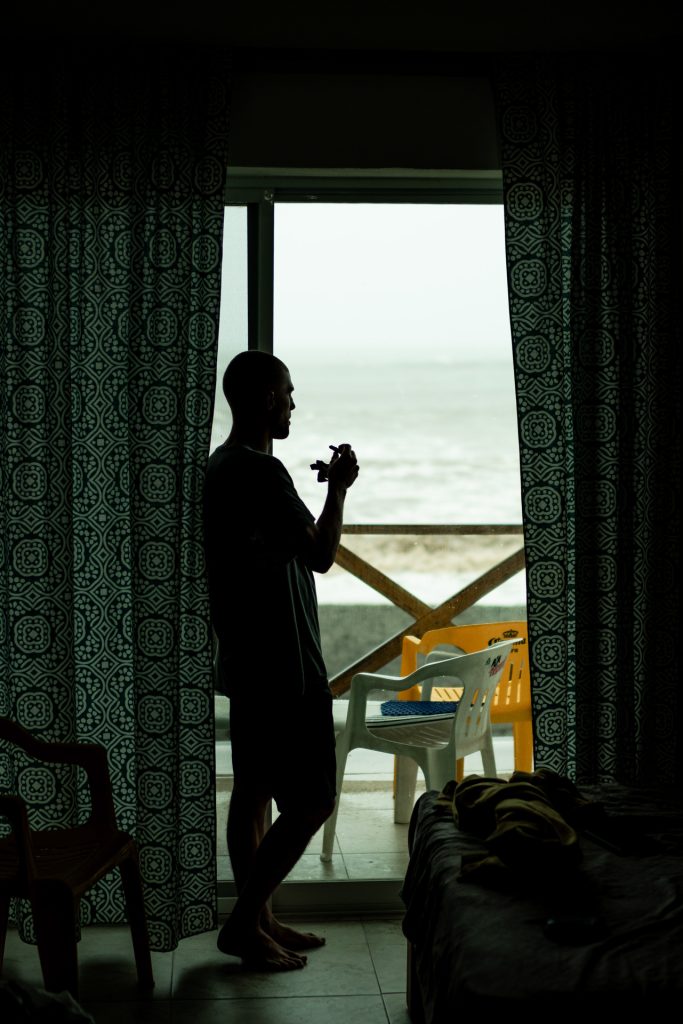
Stephen Jones
After our 4 hour journey through a heavily cartel laden country, we were relieved when as soon as we arrived the welcoming was warm both from locals and other surfers on the same hunt as us. And it all paid off over the next 3 days when we finally found what we’d spent the past two weeks searching for; a peeling, warm water, left hand point break. We spent every hour we could in the water and only came in to eat or sleep, I hardly even took out my camera that entire time. In fact, I don’t even have a photo of the wave! While a part of me is sad I never captured it, a larger part of me is satisfied with that. This trip taught me that the success of an adventure is not quantified by the photos you have to show for it, and sometimes it's a good thing to leave the camera in the bag.
If I had anything to give as a tip to someone planning a similar adventure, it would be to stop planning. I don’t mean do nothing at all, but avoid diving too deep into your plan because the rigidity of your schedule will act as bars around your experience. A good adventure is always a result of the unexpected, so allow room for that to come. For us, almost nothing went to plan, and that is what made it such a great trip.
As far as what’s next for me, it’s time to chase a dream I’ve had for most of my life. Over the next few months I’ll be traveling around the western United States and Canada in my ‘84 VW Vanagon capturing the landscapes and people along the way the best I can. I have a passion for travel photography and storytelling, and while I’m only at the beginning of my career, I’m extremely excited for what will come from this next journey and the companies I’ll have the chance to work with along the way. .
You can check Stephen's work on his Instagram or his Website.

Discount Applied Successfully!
Your savings have been added to the cart.