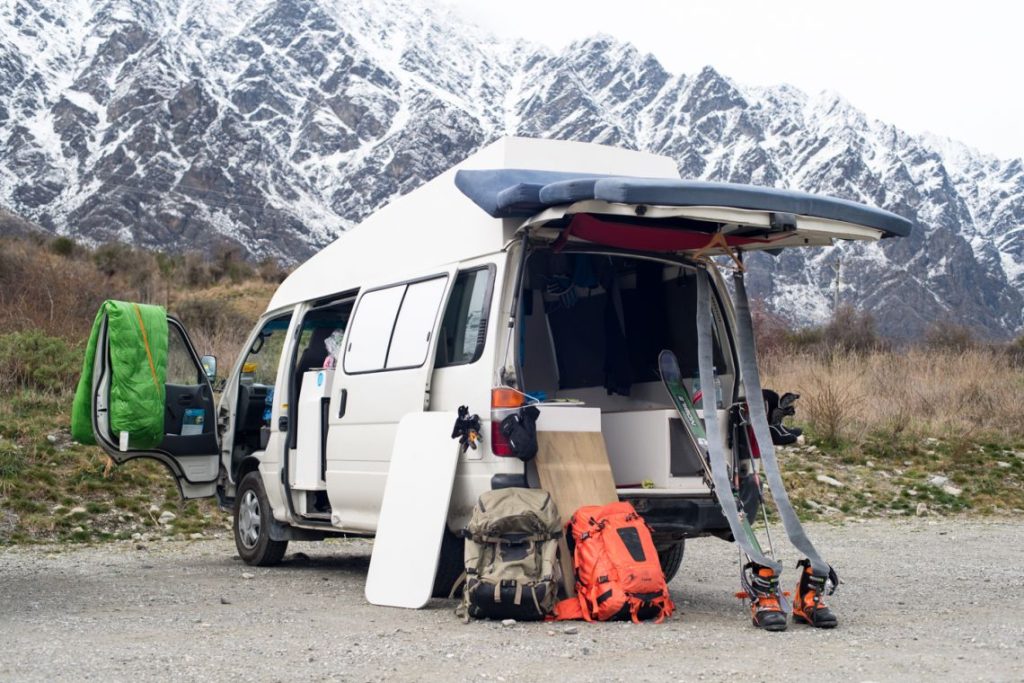
Staff Pro Takahiro Nakanishi took his Shinn for ride in New Zealand. Access to stunning locations often takes a bit of extra effort. Heading up to the snow in New Zealand Taka transitioned from van-life mode to pedal power with a fully loaded Shinn.
When we saw these shots of his pack set up, we had to find out what was in there...


Hi Taka! Where were you going with your Shinn fully loaded like that on your bike?
Shooting in New Zealand, we started at a spot where there is public parking at the end of an access road which continues deeper up the valley.
Where were you going?
On the bike, we headed up to a mountain hut for our first night. The way up is basically a tramping* path in the middle of a farm in a National Park. It's quite flat terrain so we thought its good to make the trip by bike.
(*In New Zealand: "tramping" = "hiking")
What was your goal?
We were hiking up to the glacier to ski its terrain with the beautiful landscape, and shoot photos of that to make a nice story for Japanese magazine.
What's in the bag?
For camera gear, just my Nikon body, 3 lenses, and extra batteries, no tripod.
We stayed at a mountain hut so we didn’t need to bring a tent or sleeping matt. You can see everything else that was in the bag here:

Was all of that in the bag?
Yes, all of those things are packed in of Shinn (apart from the ski and boots which you can see are strapped on the outside). Plus, not in that picture, I had another 1L bottle of water, some snacks, 4 packs of dried rice, bacon, egg, mushroom, leek, milk, butter for pasta. Also I had extra first layer and socks. I think that’s it… ! We didn’t have any tools to attach gear to the bike so it was all in the Shinn pack!
Thank you for the snapshot of your adventure Taka!
You can follow Takahiro Nakanshi's English blog here.
"We Are f-stop" is for all f-stop users to share their stories from the field, from small daily adventures to epic travels. Contact us with your story on Facebook or drop us an email to [email protected] and let us know where your photography takes you and your f-stop pack!
SHOP ALL GEAR MORE WE ARE f-stop


©2022 F-stop
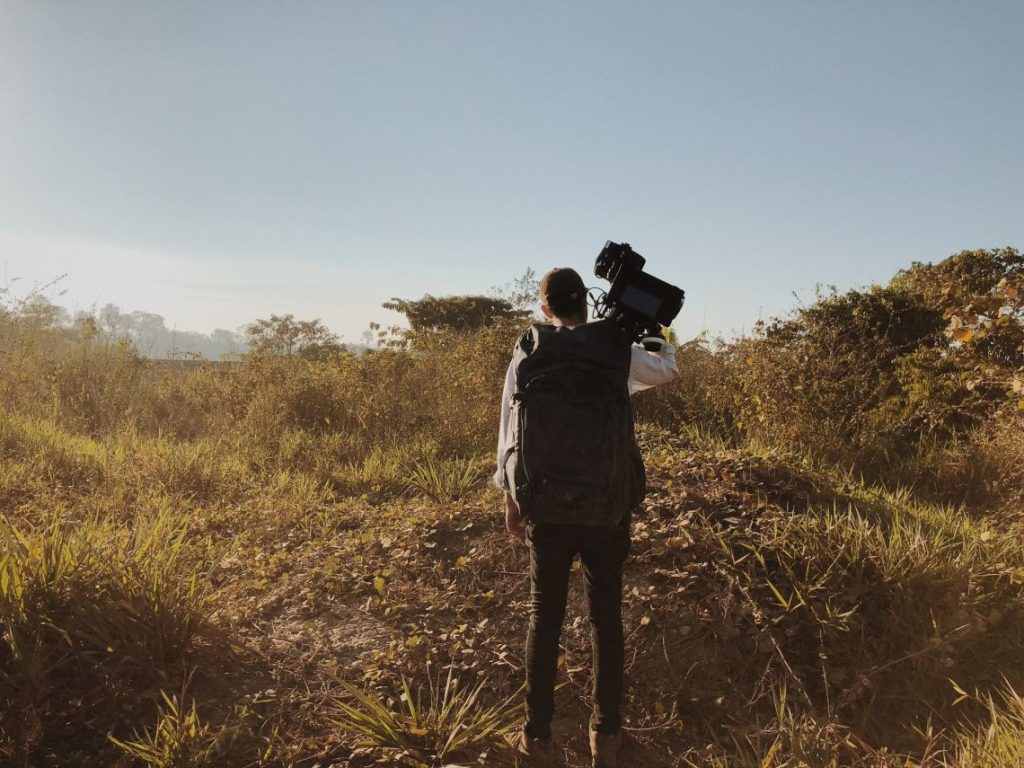
The award-winning Canadian filmmakers Jean Parsons and Jennifer Chiu founded self-directed studies as a film-based artist collective. Parsons and Chiu traveled to Madre de Dios in the Peruvian Amazon with director of photography Farhad Ghaderi to make a documentary that explores what it means to conserve one of the most precious forests in the world—and the various people upon whose shoulders this responsibility now sits.
From the city streets of Puerto Maldonado, into the outskirts of the jungle, then deep into the Tambopata National Reserve the project takes audiences into a series of unique worlds within the forest and beyond. We see the lives of a Peruvian miner and a British scientist whose living laboratory could save the forest from deforestation caused by cattle farming. We meet one of the oldest surviving cattle ranchers in Madre de Dios—an 84-year-old woman who continues to work her land and animals each day. We visit the oldest eco-tourist and scientific research lodge in the Peruvian Amazon to understand how tourism is used as a form of conservation. And, finally, we see daily life with a young indigenous woman raised in the forest who, paradoxically, must live and work in the city in order to preserve her community and her culture.
Interspersed with tableaus of daily life on the roadsides, riverbanks, small streams, and city streets of Madre de Dios, the film serves as a collaged portrait of this unique and mythological place in the world.
Words and images by Jean Parsons and Jennifer Chiu

We are Jean Parsons and Jennifer Chiu—two filmmakers from Vancouver, Canada and founders of the film collective, self-directed studies. We are interested in themes that consider the social and political issues of race, gender, history, and the environment and we work to produce cinematic, humanistic work that draws upon the poetic logic of cinema.
Together, we try to explore the complex social realities of space and place through very intimate stories about individual people. For us, each project begins with a question and each film is a process of discovery that aims to understand the many different perspectives at play within the site-specific societies that we’re exploring as well as their relationship to our larger, global society.
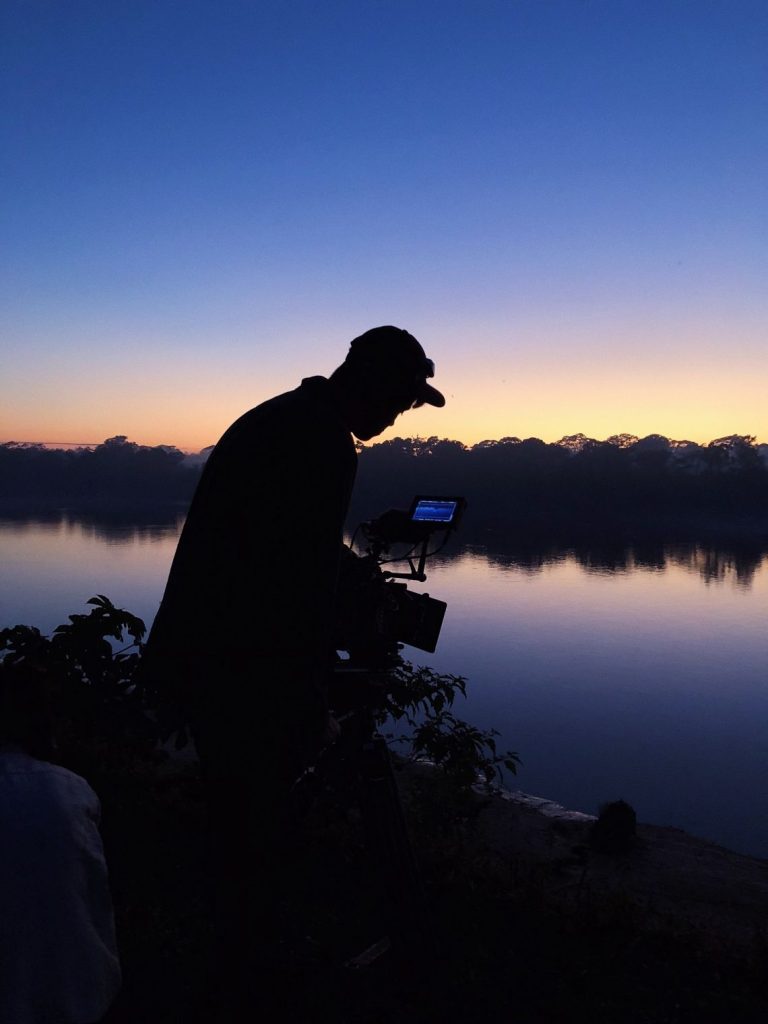
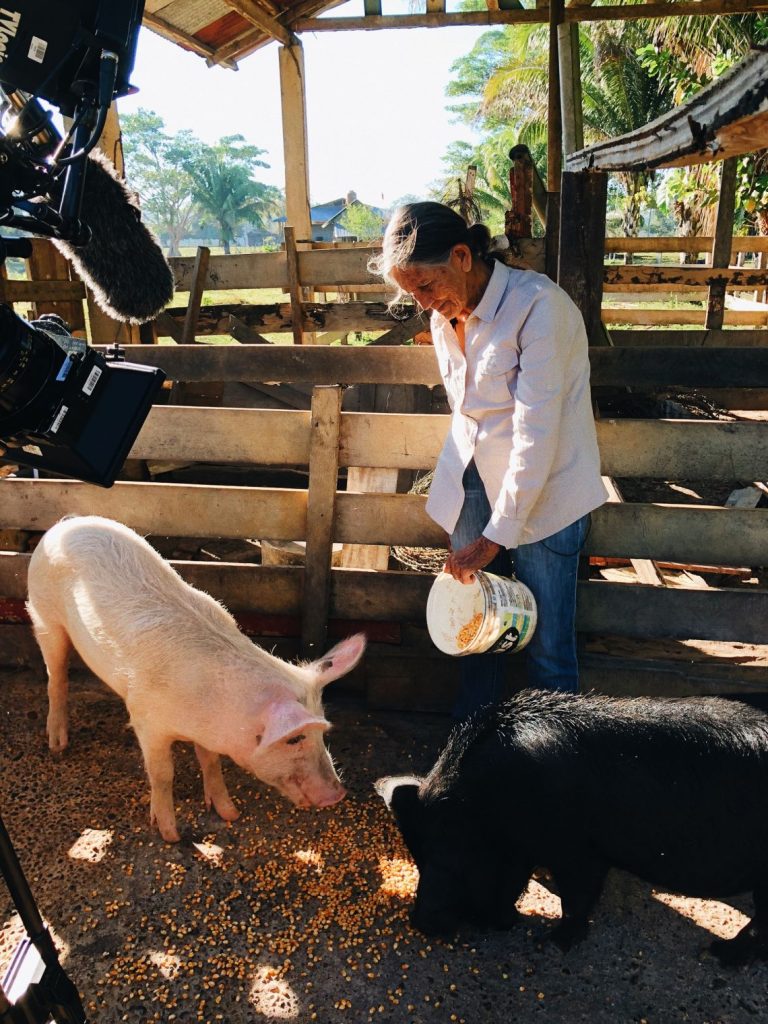
With director of photography Farhad Ghaderi, we traveled to the Madre de Dios region of Peru to shoot a film about conservation in the Amazon and what it means for the various local and global interests that converge in this beautiful, special, and endangered place.
Coming from British Columbia, Canada, which itself has a vast rainforest that’s at risk from climate change and extractive industries, this is an idea that hit close to home for us, despite taking place halfway around the world.
The f-stop SHINN was invaluable for getting our gear in and out of remote locations. We took the backpack on hours-long boat rides down the Tambopata River, into primary rainforest, and across remote farmlands accessible only by dirt roads and our tiny vehicle. We shot using the Arri Amira and a set of Cooke prime lenses. There would have been no way to safely trek through jungle terrain with that kind of camera kit without the SHINN. It absolutely elevated what we were able to visually achieve on this shoot.

We just received funding to make a scripted short called Spring Tide, which we’ll be shooting next summer on one of the Gulf Islands, off the western coast of Canada. The film is a semi-autobiographical exploration of the moment in a young girl’s life when she realizes her sexual objectification in society.
Our work plays in film festivals around the world and some of it is available online. You can learn more at www.selfdirectedstudies.com and www.vimeo.com/selfdirectedstudies.
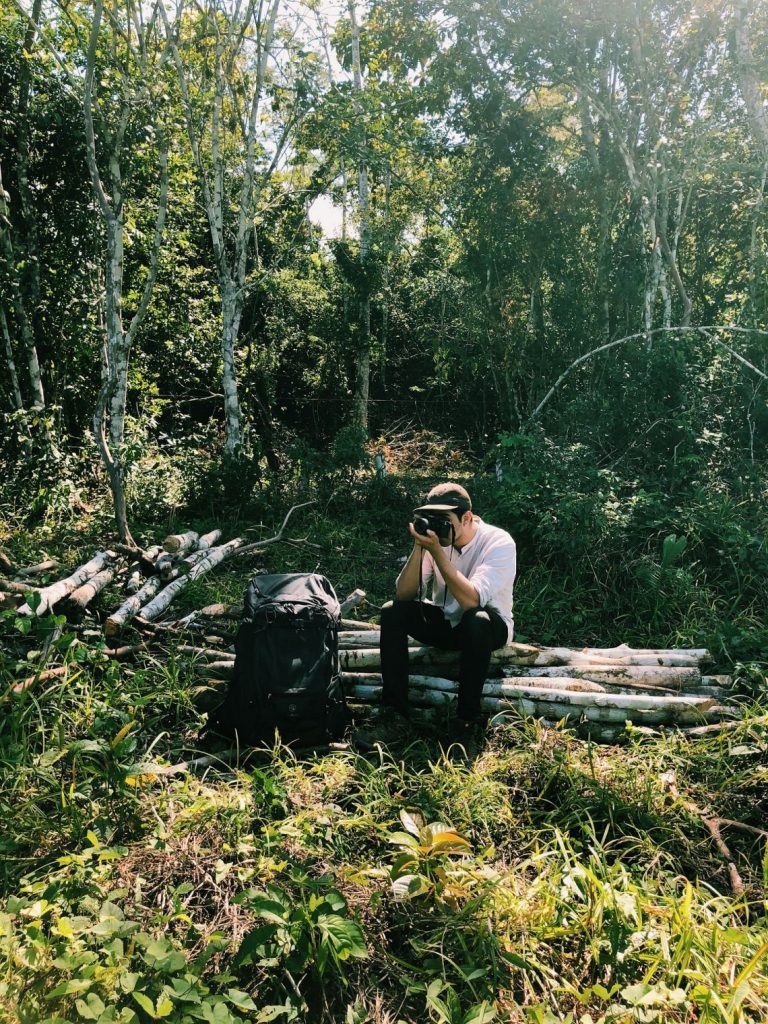
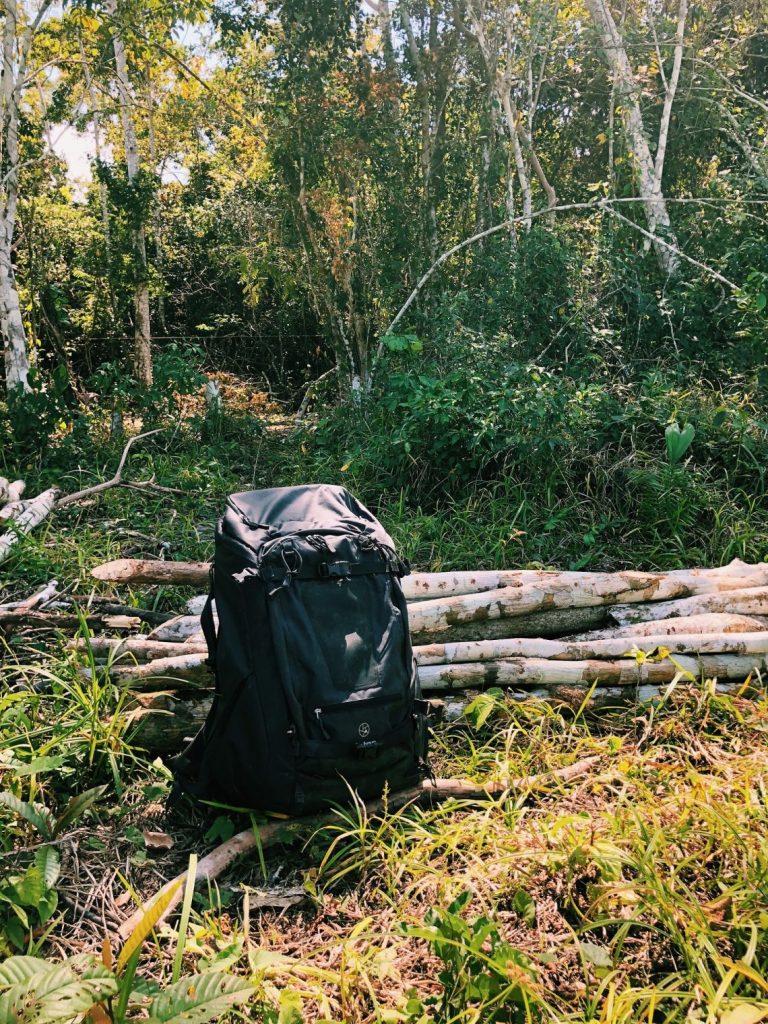
"We Are f-stop" is for all f-stop users to share their stories from the field, from small daily adventures to epic travels. Contact us with your story on Facebook or drop us an email to [email protected] and let us know where your photography takes you and your f-stop pack!
SHOP ALL GEAR MORE WE ARE f-stop
©2022 F-stop
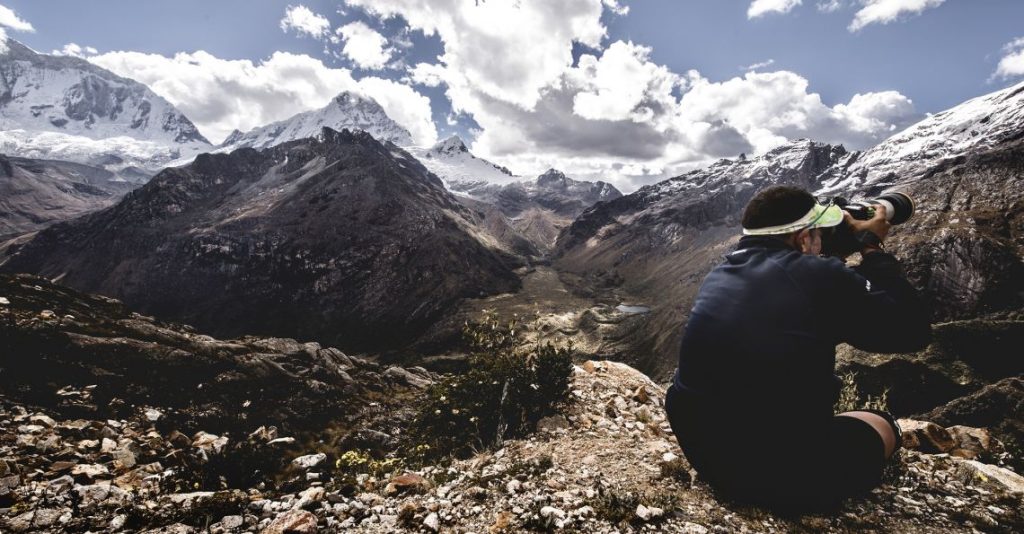
f-stop customer Anthony Gordon has been a documentary film maker for the past 25 years. On his travels he has filmed in over 52 countries, and being on the road as a storyteller can be very hard on your equipment. Anthony got in touch with us to let us know how the f-stop Shinn has helped his creative workflow around the world, giving him protection for multiple long haul flights from his base in Sydney, Australia, and giving him the flexibility to reduce the number of bags he takes on his travels.
Words and photos: Anthony Gordon


One of the major projects I am on currently is filming a four-part documentary series on BikingMan (www.bikingman.com) which is an unsupported ultra cycling series in Oman, Corsica, Peru & Taiwan. It means up to 2 weeks on the road in remote locations where every day we face the unknowns of weather, logistics, power, food and accomodation concerns.
What I do rely on is f-stop gear to ensure that my kit is safe, secure and waterproof over the 1,000's of miles of relentless dirt roads. In virtually all the cases, an equipment failure could mean the end of the shoot - as there are no spares in the middle of the Peruvian Andes, for example! Having used virtually every brand on the market with limited success, the arrival of f-stop was a game changer.

I've just finished in the High Andes in Peru where we covered 2,550km's over 10 days and in excess of 35,000 meters of elevation. I produced 25 minutes of daily social and broadcast content, 100's of images, live feeds and drone content. f-stop allows me to carry multiple Canon Bodies & lenses in addition to all the batteries, cables, laptop's and HDD's together witht he smaller DJI Drones in the one pack. Sensational to say the least!
Being on the road for over 6 months a year is challenging enough without the worry of gear in transit and on location. f-stop has truly made a significant difference to the 1000's of hours of stories that I create every year to bring the wilderness into peoples lives.


http://fstopgear.com/products/packs/shinn

"We Are f-stop" is for all f-stop users to share their stories from the field, from small daily adventures to epic travels. Contact us with your story on Facebook or drop us an email to [email protected] and let us know where your photography takes you and your f-stop pack!
SHOP ALL GEAR MORE WE ARE f-stop
©2022 F-stop
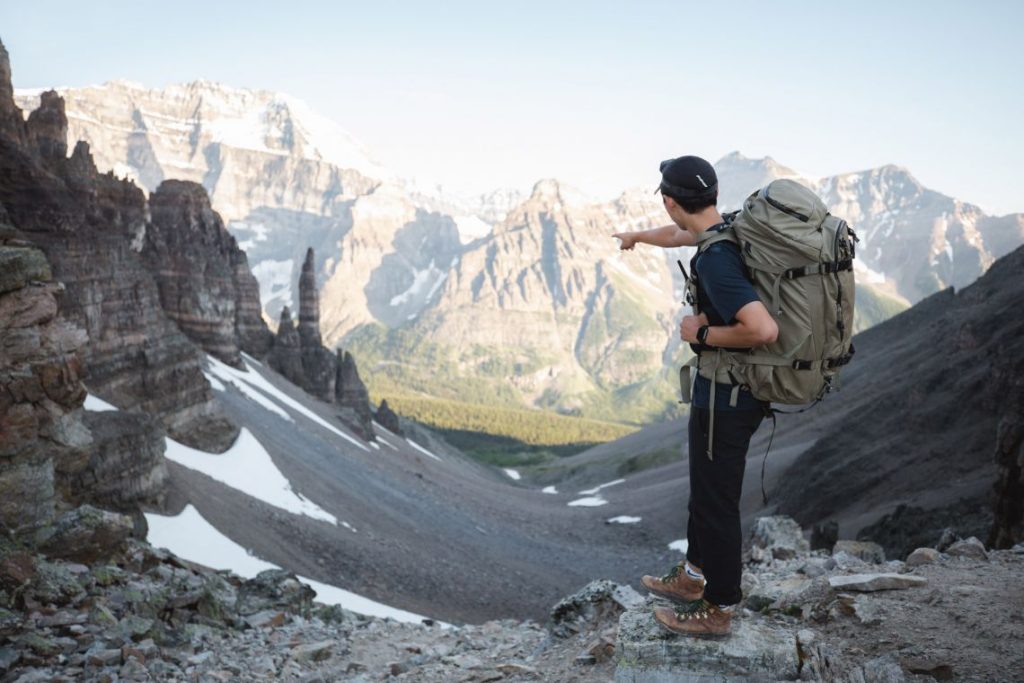
Eric is an adventure photographer based in Alberta, Canada. His origins are in board sports, but he has since expanded into other mountain-related activities such as climbing, biking, skiing, and more. He thrives on learning and acquiring new knowledge while simultaneously pushing himself beyond his comfort zone. Photography is a highly influential motivator for Eric that enables and inspires him to get outdoors.
Words and images by Eric Shiozaki

The Grand Sentinel is an iconic 400-foot obelisk quartzite rock tower located near the popular Moraine Lake in Banff National Park. Of the two prominent climbing routes the Grand Sentinel features, we had chosen Cardiac Arête, which follows the south-facing edge of the spire. Our goal was to capture the first light on the tower as our team of climbers ascended the final pitch of the climb. Due to the nature of the tower, the climbing is extremely exposed and airy with high wind and sections of steep roofs and slabs with no wall visible below. Cardiac Arête is a high alpine climb that requires technical ability, perseverance, and a strong headspace. We attempted the climb on August 16th, 2020.????
This project was important to me because it challenged me logistically, mentally, and physically, and it required me to work with a tight-knit team. The approach to this climb is situated in the Larch Valley, a stunning valley in Banff National Park surrounded by towering peaks, larch trees, and glacier-fed lakes. I found the Grand Sentinel while hiking in the area for a specific shot I envisioned near one of the lakes on the approach. I attempted the hike six times over three years in an attempt to get a very specific photograph at the lake, but the conditions never worked out. One day, at the top of the pass before I even got into climbing, I noticed the incredible tower that is the Grand Sentinel and thought to myself, ‘it would be insane to climb it one day’. Since then, it has been a dream of mine to climb and document an ascent of the tower.
Our crew consisted of Levi Soprovich, a strong sport climber; Dylan McLean, a volunteer climbing instructor; Shehzadi Alejandra, a frequent marathoner; Tim Put, a passionate outdoors person; and my partner Jaimie. The climbing team consisted of Levi, Dylan, and myself. We planned to have Levi and Dylan climb, followed by myself and Dylan again. Our support crew consisted of Sheh, Tim, and Jaimie who helped schlep gear up the mountain, cook food, and keep the warm drinks coming. Lastly, I was running around photographing the adventure and organizing the trip.


CHALLENGES
Our biggest challenges throughout the adventure were weather, time, and ourselves. We had gambled everything on the weather being perfect for this day and the entire project could have been cancelled if the conditions were not right. The forecast ended up being ideal and so the next challenge we faced was time. We wanted to capture the first light on the tower which required a 2am start in the pitch black. Tensions were high in the morning due to stress, lack of sleep, and the high amounts of pressure placed on the trip. We had spent lots of time, money, and effort to prepare for the climb which placed significant pressure on everyone. To keep the crew safe and focused, they needed to operate in a strong headspace. Before we set out, I huddled the crew together and informed them that if anyone had any hesitations we could turn around, no questions asked, and cancel everything. High levels of pressure can cloud judgement and performance and I did not want to force anyone beyond their capabilities. The battle between fear and time was our biggest obstacle and something we planned for during our test run of the climb, but severely underestimated. The start at 2am was brutal; nobody slept the night before as we were all anxious and excited.
The first few kilometres of the hike were the most challenging, with constant elevation gain and 35 or more pounds in everyone’s pack. There were snow crossings and scree slopes, but the views are what pushed us through. We arrived slightly late to start the climb, but the crew made quick work of the first two pitches and caught up to our schedule. Since we were hoping to catch first light, the entire first half of the climb was in darkness and the climbers had to have hand warmers in their chalk bags to keep their fingers warm. Pitch 3 was the most challenging pitch and Levi and Dylan spent the most time there. Dylan had moments of anxiety where he didn’t think he could keep going, but Levi talked him through it and worked out the moves of the climb. To add to the tension, frequent avalanches and rockfall could be heard constantly throughout the valley. It sounded like thunder was rumbling throughout the climb. We even witnessed a major rock slide that completely washed out the scree slope that we used to approach the climb. The ambience in the valley was unsettling, to say the least.
On pitch 4, the final pitch of the climb and arguably the most technical section, Dylan veered slightly off route and in one of the most exposed and airy areas he lost his grip and fell. Dylan fell about six feet before hitting the end of the rope and bouncing with nothing underneath him. Our support crew was spectating from a cliff edge a few hundred metres away and all of our hearts sank into our stomachs. Luckily he was fine and immediately corrected himself and pushed through the crux of the pitch, joining back up with Levi at the top of the spire. There was so much wind on the tower and up breeze from the valley that their backpack straps were just floating next to them as they stood there. When I asked how it felt to stand up atop the spire, at the exact same time Levi said “It was good,” and Dylan said “TERRIFYING.” After adjusting to the exposure they looked around, enjoyed the panoramic views of the valley, chugged a well-earned RedBull, and sat back down.

FUN & SURPRISES
One of the best moments of the adventure was seeing Levi and Dylan standing up on the tower and howling back and forth in amazement from so far away. We were all so proud of them for making it up there and pushing themselves far beyond their comfort zones. We couldn’t believe they made it and how perfect the conditions turned out to be.
Some of the best “food” we had was undoubtedly the hot pour-over coffee Sheh brewed for us, although we also appreciated the warm meals prepared by our support crew. Because of our large crew size, we were able to afford a few luxuries that helped make the entire experience significantly more enjoyable. Thanks to Toaks Outdoors, we had four stoves running to keep a constant supply of warm food and beverages. Toaks ultra lightweight titanium cookware and stoves were essential to our safety and well-being. Not only did we have warm food, but we were also kept warm by the heat of the alcohol stove in our small rock fort at our basecamp near the tower. Having these additional amenities made the overall journey considerably more pleasurable.


TRICKS & TIPS
For anyone thinking about making this climb, my recommendation is that you leave room for a lot of flexibility in your plan. It’s highly unlikely everything will go according to plan and it helps reduce the stress if you’ve anticipated there will be some some problems along the way. You simply cannot plan for how long an anxiety attack or obsessive buddy checks on the wall will take. In our case, we had expected the climb to take two to three hours, but it ended up taking four hours.
I also think that giving everyone an “out”, without any judgement or question, was essential to the success of the project. Several sections of the hike are extremely dangerous and could have resulted in severe injury or death, so it’s important that everyone is feeling confident and committed before setting out.
WHAT’S NEXT
I am an adventure photographer & filmmaker based in Alberta, Canada. I surround my work with nature and enjoy capturing candid moments shared between friends. I thrive on pushing myself to the limit and engaging in new activities outside of my comfort zone. By sharing my experiences, I hope to encourage and inspire others to get outdoors and explore for themselves.
My next adventure will be a helicopter trip to Assiniboine Provincial Park to do some astrophotography and hopefully some time-lapse work. I also hope to follow this up with a remote sea plane trip up near the North West Territories! In the winter, I hope to venture deeper into ice climbing and explore some remote glaciers. More of my work can be found on my Website or my Instagram. Thank you so much for following along and reading; I hope you enjoyed!

Gear used during this story:
"We Are f-stop" is for all f-stop users to share their stories from the field, from small daily adventures to epic travels. Contact us with your story on Facebook or drop us an email to [email protected] and let us know where your photography takes you and your f-stop pack!
SHOP ALL GEAR MORE WE ARE f-stop
©2022 F-stop
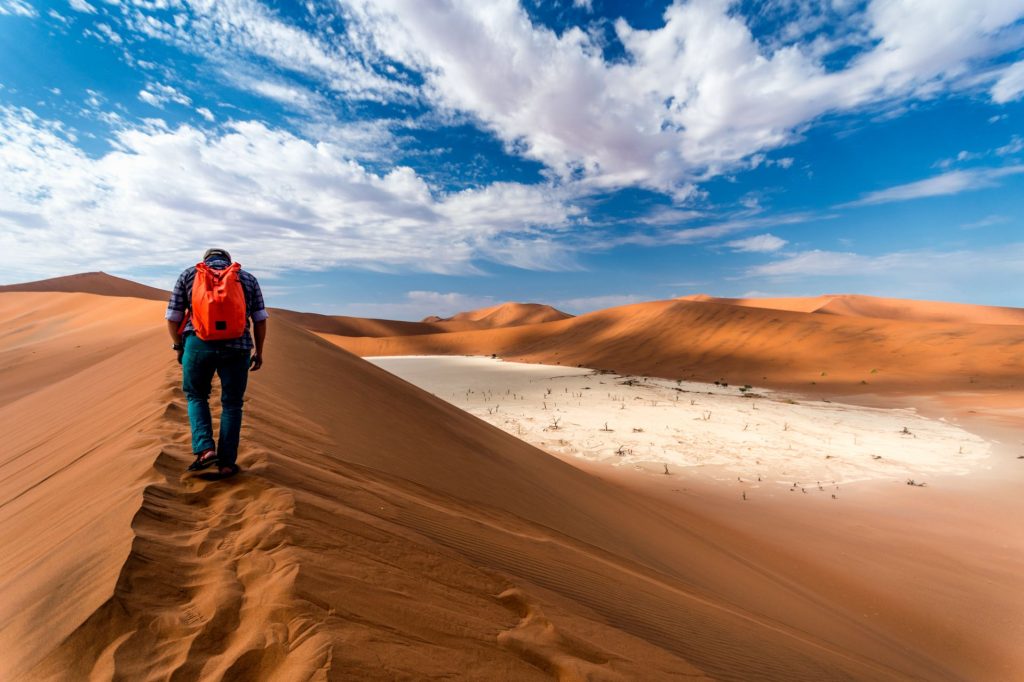
The adventure starts in the most extreme place in the world that is the Chilean Patagonia, which has the third natural reserve of fresh water of the planet. In the Campos de Hielo Sur (Southern Patagonian Ice Field) everything you see is an experience, its wild paths, fierce weather and unique landscapes. This journey is a milestone in my career as a photographer and as a person because being able to reach this place, it is necessary to be trained in extreme environments, practice your ice skills, glacier progression, rescue techniques, among others. After having said all of this, it is important to make a trip for several days to the most beautiful places of the planet as well as the most difficult ones. Every trip starts with a 3-hour flight to arrive to the only airport of the zone. Then, driving in a 4x4 car for a couple of days and don’t stop there but continuing by boat for another extra hours until we get to the landing point, where after three and a half days non-stop, eventually, we are at the beginning of this experience where kilometers and kilometers of ice is seen, always supported by local tour guides, who will be our safeguards, during this harsh journey.
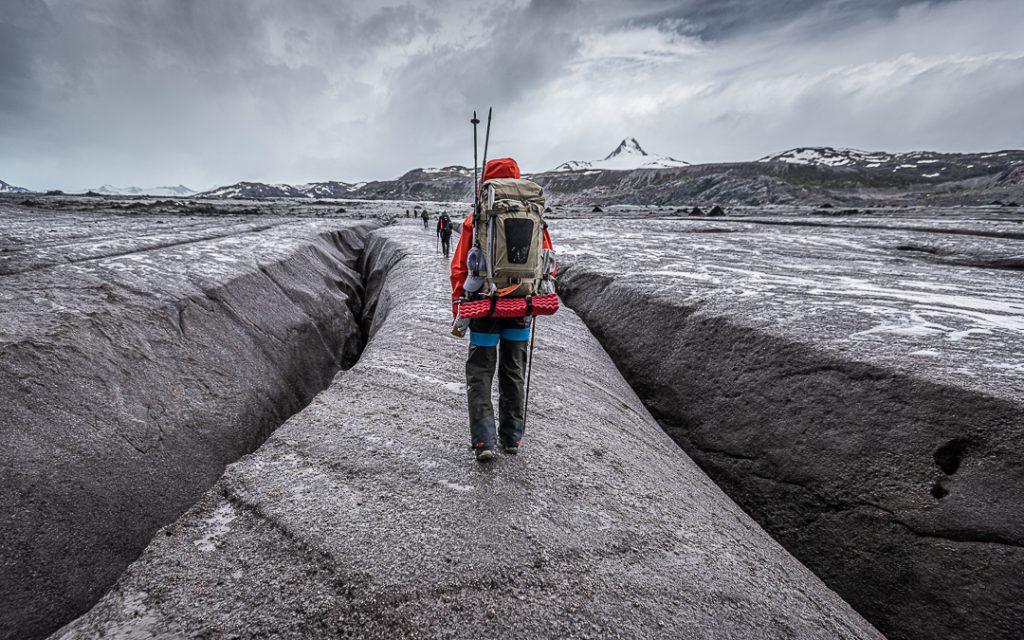
Every trip to the Patagonia is challenging, but to go to the Southern Patagonian Ice Field is like getting into the wolf’s mouth because you won’t be sure if you are coming back. One of the biggest challenges was feeling exhausted physically and the extreme weather because you are responsible for carrying the total weight of your belongings, cameras, clothing, sleeping bag, food, etc. For that reason, I prepared myself in advance by training hard with overload as much as I could, also I prepared my technical equipment with my f-stop Shinn backpack with extra batteries, carbon fiber tripod, versatile lenses because it has an ideal size that resists efficiently against snow, rain, ice by keeping my photographic equipment in perfect conditions and everything necessary for an adventure like this, however, if you feel like the most prepared person, you realize that it is not enough or you forgot something, or something comes out suddenly or it is just the weather and the ice that reminds you don’t feel like home.
One night in the middle of the ice, a storm broke over us and the wind hit our dome house where we were staying, the cold felt all over our bodies because when it’s windy, the temperature goes down to 10°C, none of our sleeping bags kept us warm enough to tolerate the cold air and wind. The night felt endless in our bodies, we waited the wind calmed down its fury against us. The cold air along with the wind took the water from our skin, we dehydrated quickly and because of that our skin cracked while the night was endless for going to sleep. During this trip, I discovered new techniques to protect myself and develop my work efficiently. For example, I became minimalist about equipment and carrying weight so that you don’t overload your backpack or solving simple problems because if you don’t control them on time, they can become catastrophic like injured feet after walking a distance of 50 kilometers which is the same as having a wound exposed to air or any other movement like walking on millenary ice that can end up with a person falling into a crack that will never go out.
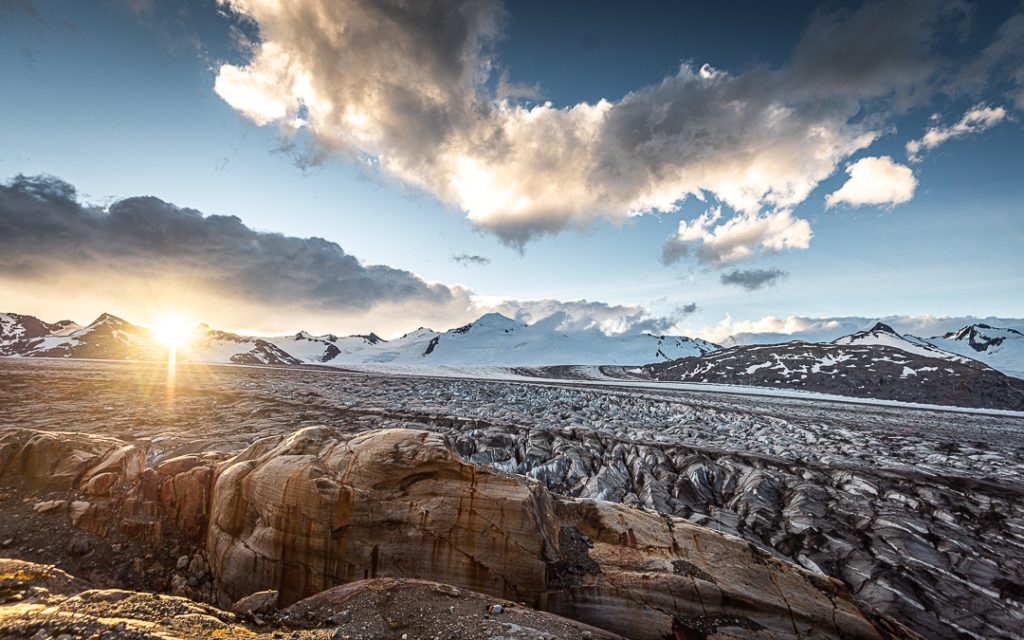
One of the best moments of this trip was being able to walk freely kilometers and kilometers of millenary ice, contemplate the purity of the landscape surroundings, drinking pure, crystal clear and clean water extracted from ice, feeling how a crack is opened under your feet, sleeping while you look up the starry sky without any light even the tiniest star of the firmament, having peace and time to take pictures of the scenery that very people has been allowed to glance and enjoy it, walking on the glaciers that will support life on the planet, however, it is worth noting that glaciers are retreating almost 1000 m per year, without any ice recovery, even so, it was mesmerizing to see kilometers and kilometers of ice that were surrounding us completely that became our base to walk, sleep and eat. We saw glacier cracks and walls in front of us that were just ice and nobody have never walked on before, we got filled with natural energy. In the Patagonian culture, food is very important, it means get together to drink mate, have a good conversation, eat fried pastries, roast meat and sharing stories. I was lucky to participate in this tradition, eating around a bonfire with wood from local forest, eating roasted meat from animals fed without any chemicals, freshly ground vegetables and eating fried pastries while they are hot.
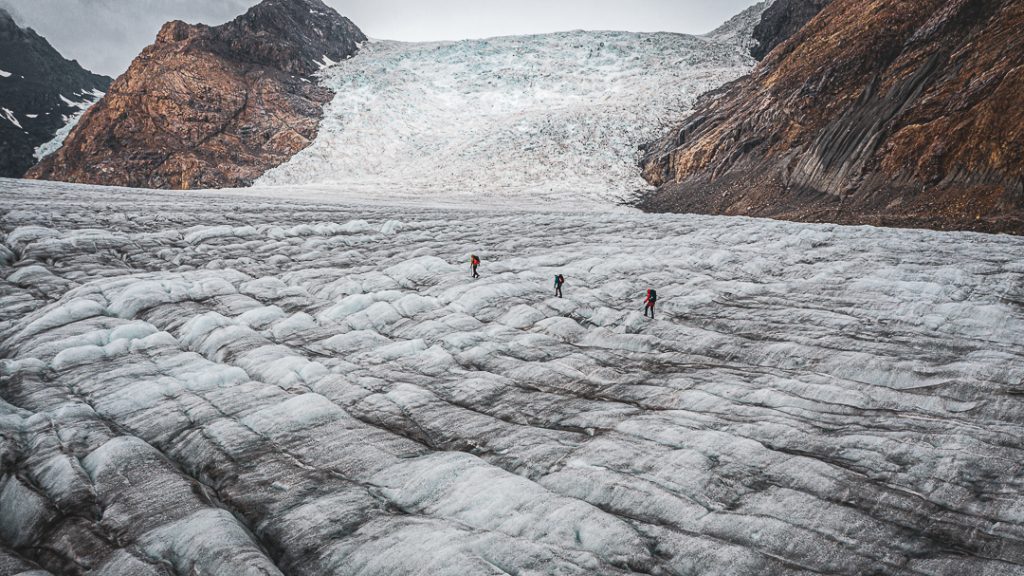
For this excursion, it is always advisable to have a full understanding of the potential environments to face, you need to be prepared physically, mentally and technically to survive in extreme environment conditions that might be there such as storms, cold air, lack of sleep or lack of food because if you are not prepared enough, you start loosing control of your mental and physical abilities which are the main cause of accidents and deaths in extreme places like Southern Patagonian Ice Field. One of the tricks I used was putting inside my backpack a double cover for the ICU where I had my camera equipment and above it putting all my clothes and my sleeping bag in order to avoid my batteries running down early. Another trick was carrying a duct tape that can fix everything and it is useful for emergencies to patch wounds, cuts and clothes when an accident occurs during the trip, besides sleeping as much as you can because the lack of sleep causes small errors that can end up in bad accidents.
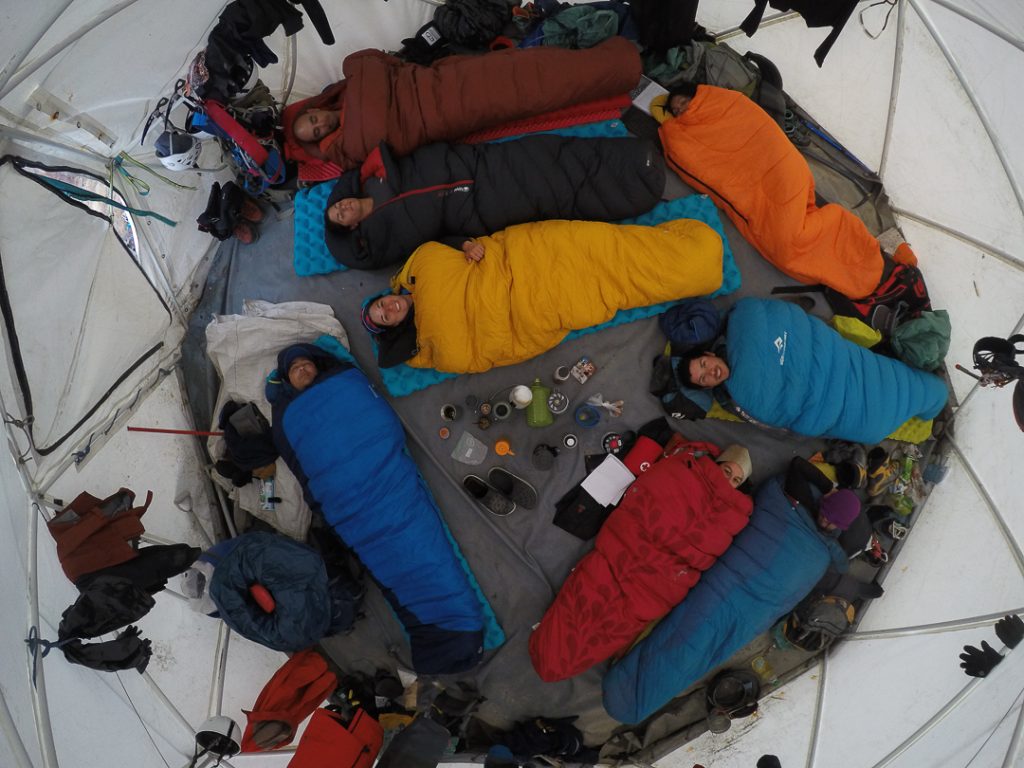
I am a photographer dedicated to live my life to the extreme in every adventure I go, experiencing it firsthand. I love telling the story from the inside as a narrator and adventurous person. If the adventure is at the the coldest place of the planet, I will be there doing what I love, generally you can find me in deserts, mountains, oceans, rivers or glaciers, everywhere someone is practicing a extreme sport, that’s where my home is, my photographic studio, my favorite place of the planet. Now, I hope traveling to the Sahara Desert to cross it again by rally driving for several weeks inside the endless dunar field and sand, but first, I will go to the glaciers of the Llaima Volcano in Chile to live a new adventure and see their unceasing cracks and stormy weather. You can check out my work and my excursions on my Instagram account @paolophotojournalist, currently I find myself visiting most of the Patagonia and looking for the best sportsmen and the most beautiful landscape to shoot.
This trip took place in the Aysen Region, in the extreme south of Chile, specifically in the Southern Patagonian Ice Field, starting on January 05th, 2021 until January 25th, 2021. For this adventure, I travelled with my f-stop Shinn 80L backpack, one of the best mountain backpacks and having the Pro XL ICU, I reduced my photographic equipment with two cameras, three lenses and one drone. I chose this versatile and resistant backpack for its suitable capacity for the most severe environments, I needed to have enough space to carry my mountain clothing, rain clothes, food, sleeping bag, security equipment, climbing ropes, etc. Along with that, this backpack would be tied up, dragged over and transported without rest during this excursion. This backpack was created to give its utmost in the most intense environments, all this gear was a gift from Cuarto Digital, a photographic shop located in Chile that are responsible for bringing this brand to South America, which is very important because in Chile there are great extreme outdoor photographers and they need the best equipment for their adventures.
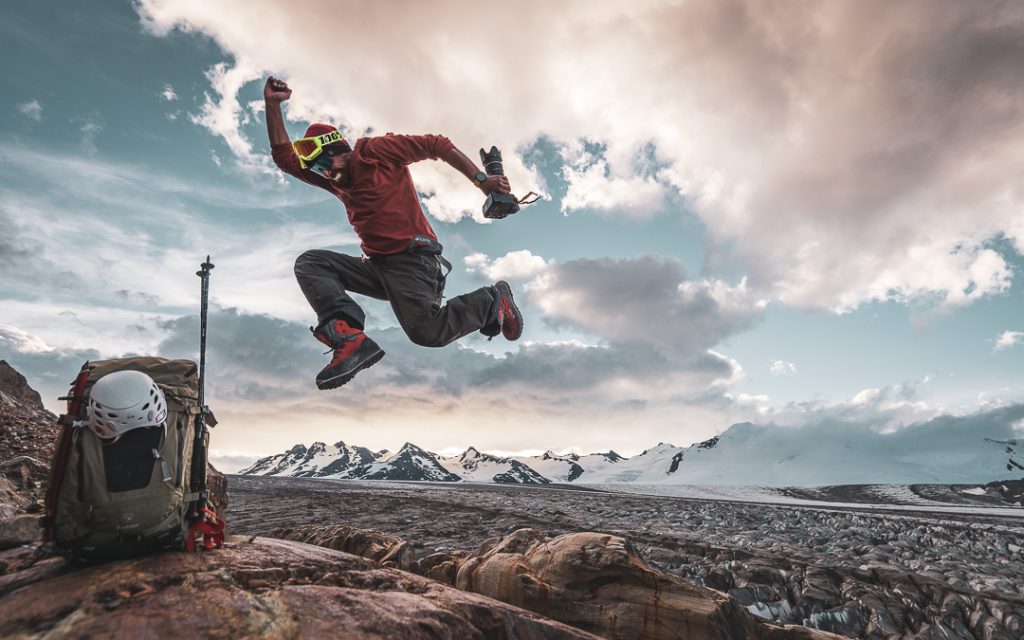
Paolo Avila is a person who loves simple things, born in Chile, country of natural contrasts, high-performance athlete, he is specialized in photography, extreme sports and also a survival expert. Nowadays, his life is divided by two suitcases, one for his clothes and the other one for his cameras. His backyard is the airport and his home is where no one can go, inhospitable deserts, giant glaciers, enormous mountains and rough rivers. He is passionate about living to the limit and capture the moment, experiencing adventures and taking photos firsthand. He loves feeling the adrenaline running through his body while he is descending waterfalls or covering up in the snow to survive. Having this lifestyle, Paolo is sponsored by different brands such as Lippi, Nikon, Cuarto Digital and Stanley that motivate him to keep living to the limit and he has been called to be part of the greatest teams created by Restart, which have worked in the most difficult events of the planet.

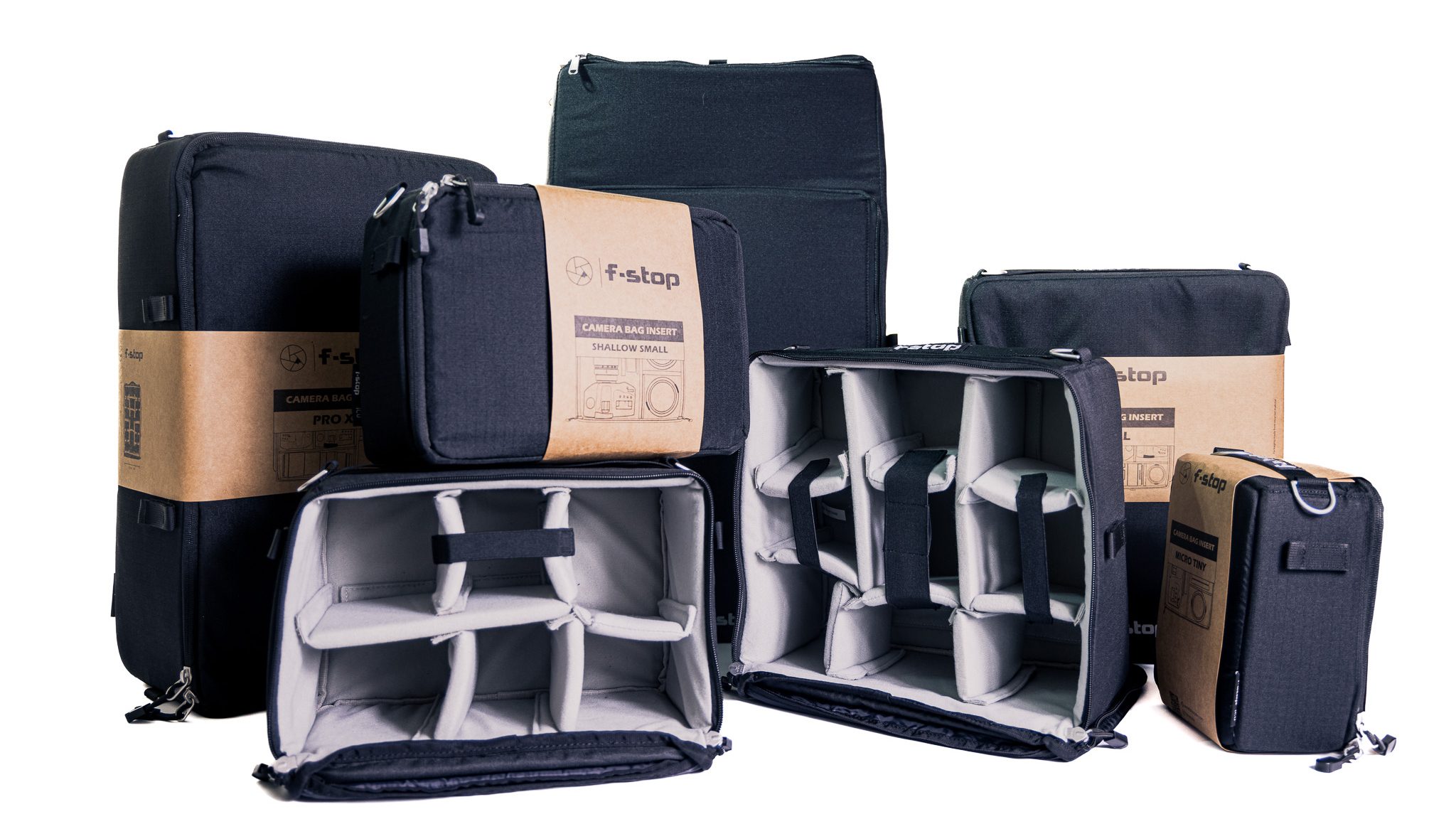
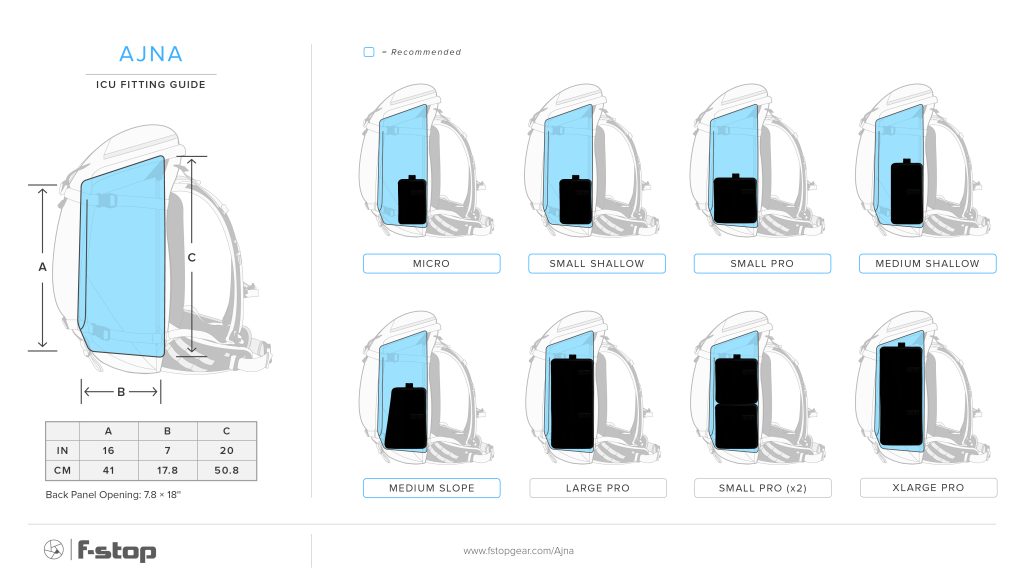
At the heart of each f-stop backpack is the Internal Camera Unit (ICU). Designed to give you ultimate flexibility and ease when packing your camera kit, our range of ICUs (camera inserts) let you mix and match different ICUs to different packs for every adventure. This ICU size guide shows you which ICUs fit each backpack, so you can get the right one for your needs.
Click on the backpack name to see how each ICU fits!

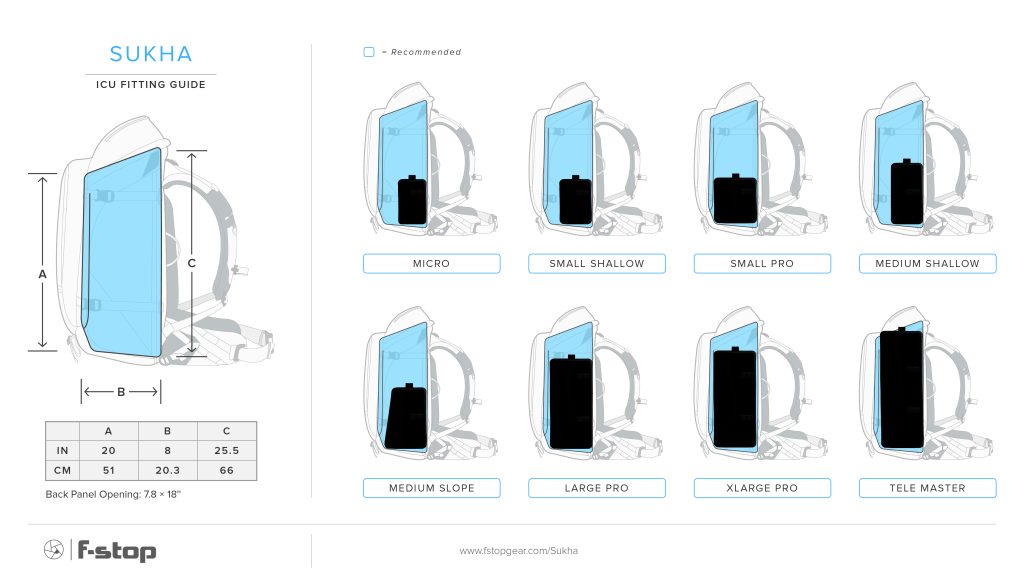

(Coming soon)


As you can see, each f-stop backpack can hold a variety of ICUs as well as drone/tech pouches, packing cells, and more. When choosing your backpack/ICU combinations, you'll want to consider the following:
Not every pack is compatible or recommended to go with each Camera Insert. For instance, the Shinn 80 L is designed to accommodate large camera/video equipment. To fulfill this purpose, both the pack as well as the Cine Master insert have greater depth compared to other packs. The Master Cine ICU is significantly deeper than the Pro XL ICU. Therefore, when you are using an XL Camera insert it will not fill out the pack fully.
To avoid any movement of the camera insert in the pack, you should attach it to the side attachment loops inside each backpack (next to the aluminium frame). Learn how to insert and adjust your ICU in your pack (video guide).
Want to make the most of the space in your f-stop backpack? Check out our guide to stacking and hatch-backing.
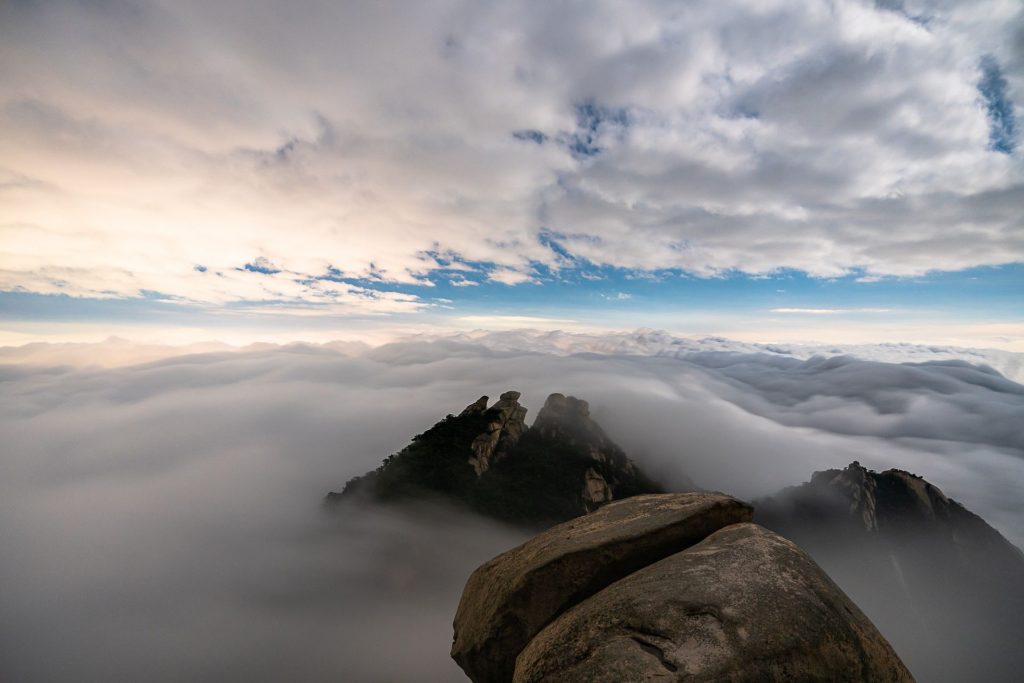
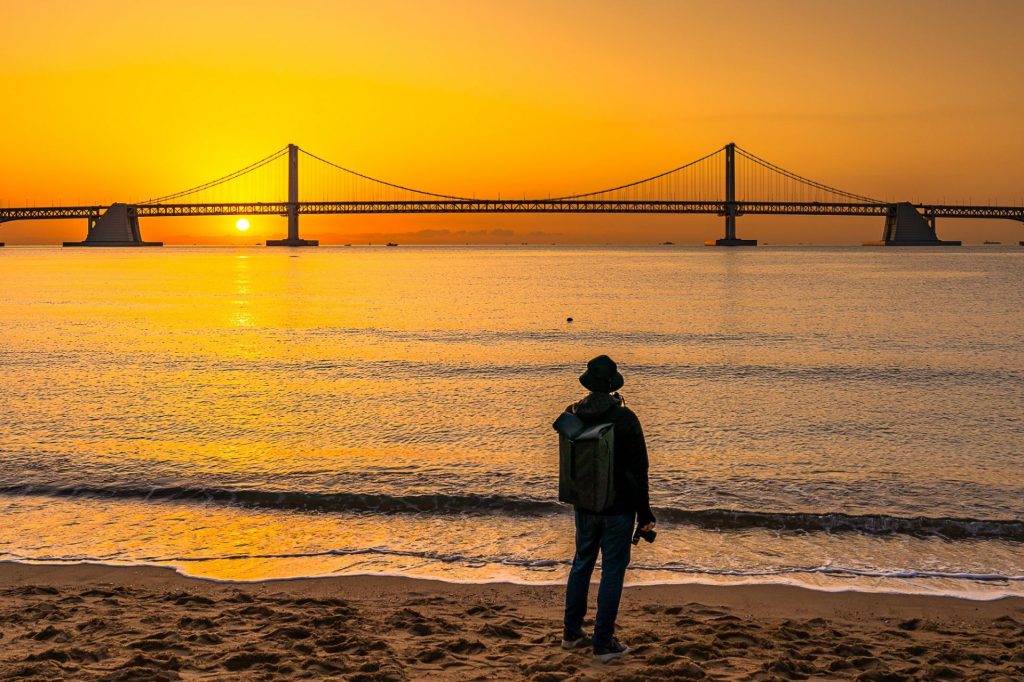
f-stop Ambassador Jongmo Seo is a photographer who’s specialty is shooting the views from skyscrapers in Seoul with time-lapse skills. Moreover, he loves adventures outside of the city like backpacking and winter sports. He's using the Shinn, Dyota 20, and Ajna packs. Most of the time he's using the Shinn for shooting time-lapses which is his most favorite backpack since he needs lots of gear for time-lapse videos. This time he's going to talk about f-stop Shinn.
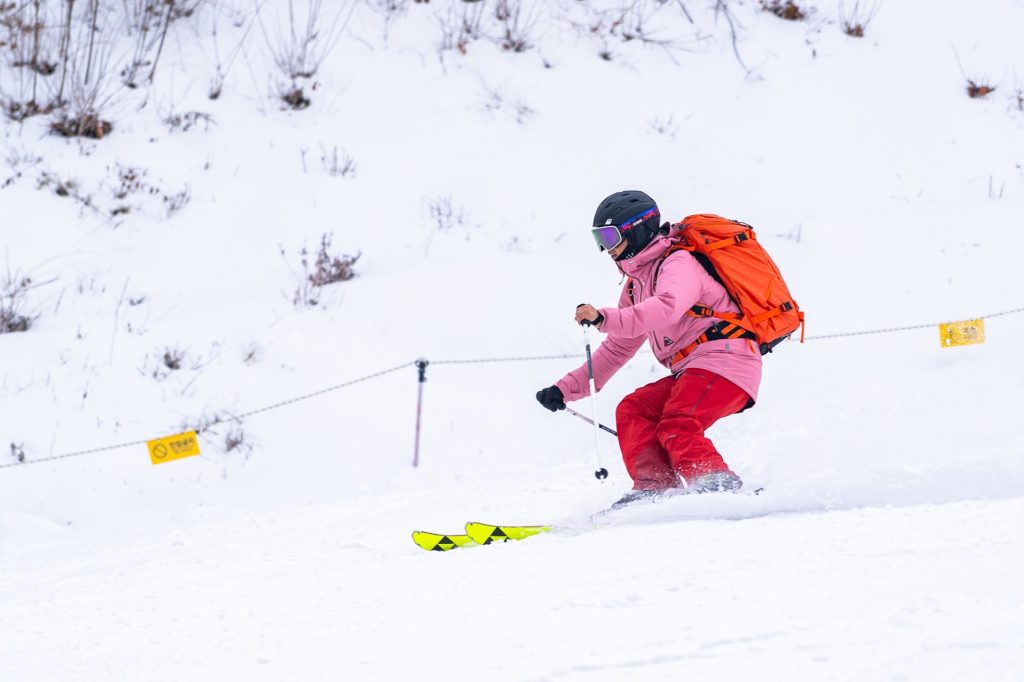
Jongmo Seo 
The Shinn is designed with Master Cine ICU and specifically designed to haul big camera setups. The combination of the pack with the Master Cine ICU gives the ultimate supersized camera bag for serious shooters hauling large video rigs and super-telephoto setups. Beside the Master Cine ICU, I own different sizes of ICUs and use them according to the gear that I need for the shootings. Also, I customize the internal dividers inside the ICU depending on the gear I carry.
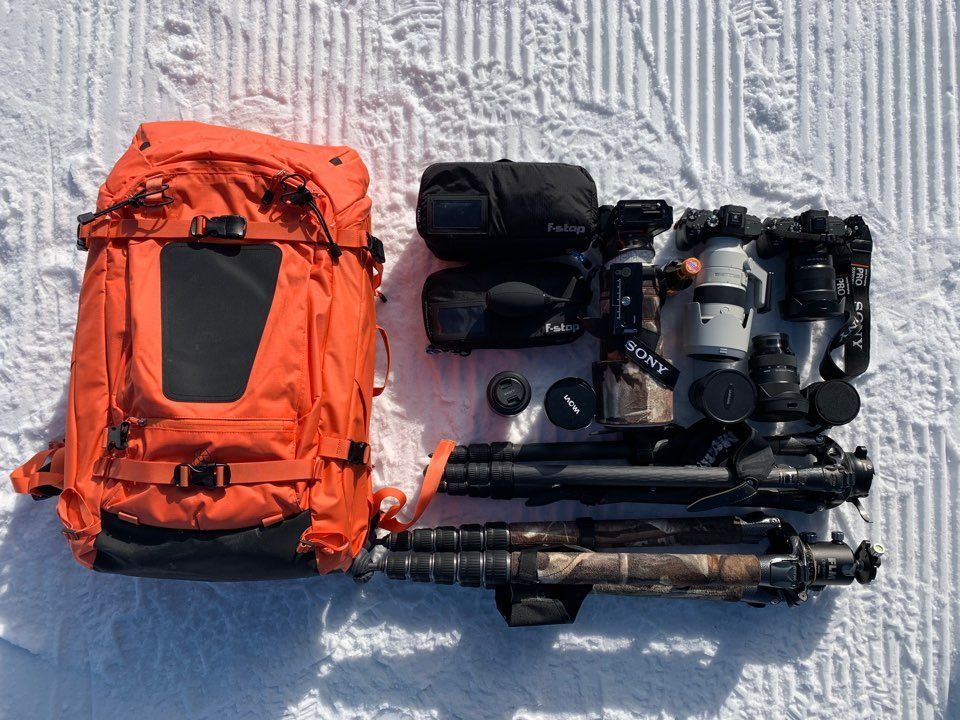
Here is the gear that I mostly carry inside the Shinn with Master Cine ICU:
Camera: Sony A7r4 and two Sony A7r3 and Lenses: Laowa12mm, FE16-35GM, SIGAM ART 24-70mm, FE35mm, FE55mm, FE70-200GM, SEL200-600 G.
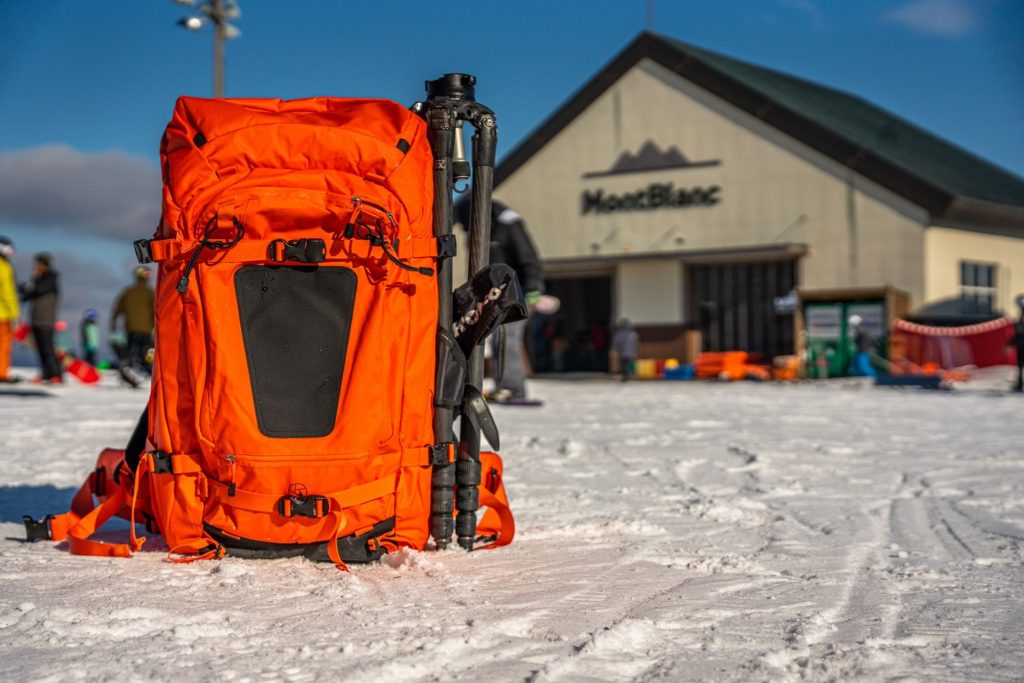
Jongmo Seo
On top of the ICU, I carry accessories to stay organized. These are the accessories that I carry:
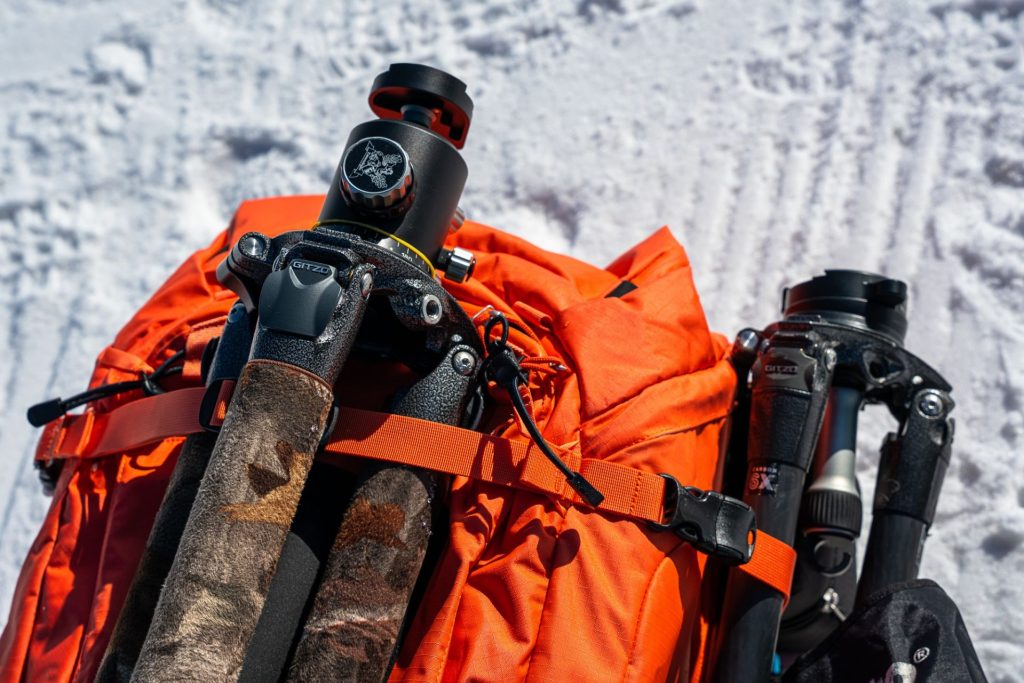
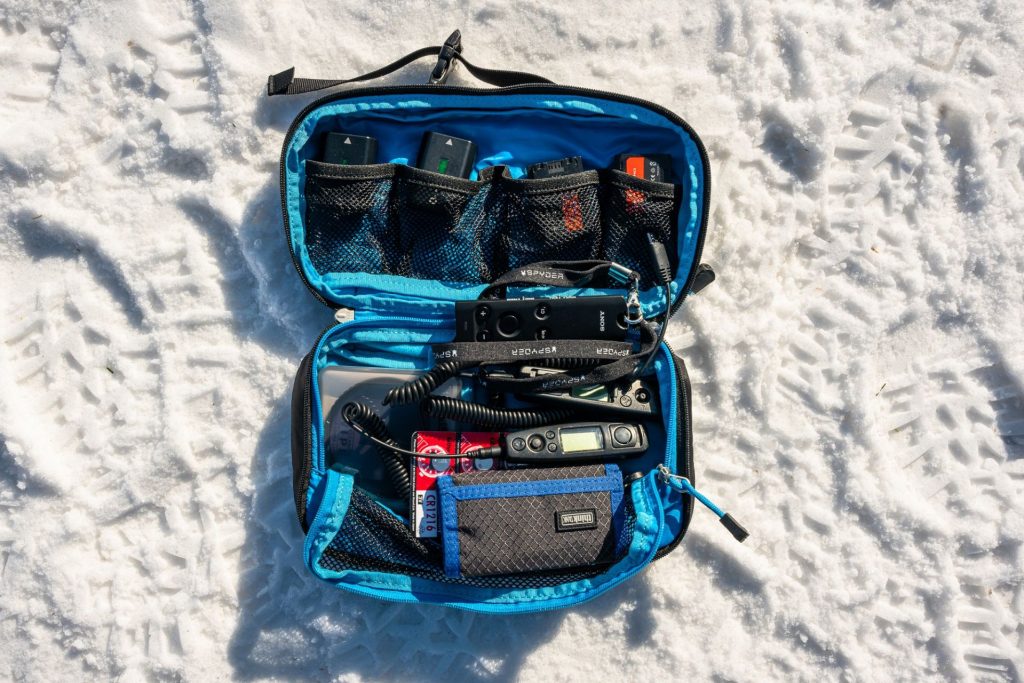
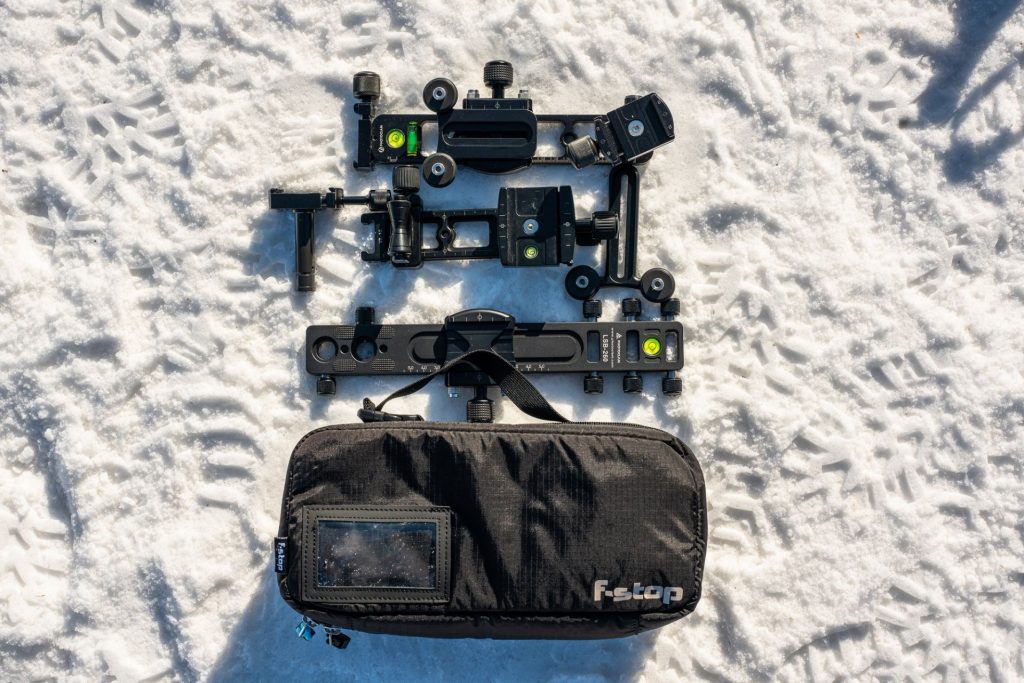
Large Accessory Pouch- Three Lens support systems, Medium Accessory Pouch for Batteries, Memory cards, Remotes, Filters, electronic horizontal meter, then Packing cell kit for my jacket jacket and compressible clothes,Three tripods attached to the pack GITZO 3542L, 3542XLS, 5563GS. In the rest of the free space inside the pack, I put some foods or clothes for hiking or shooting.
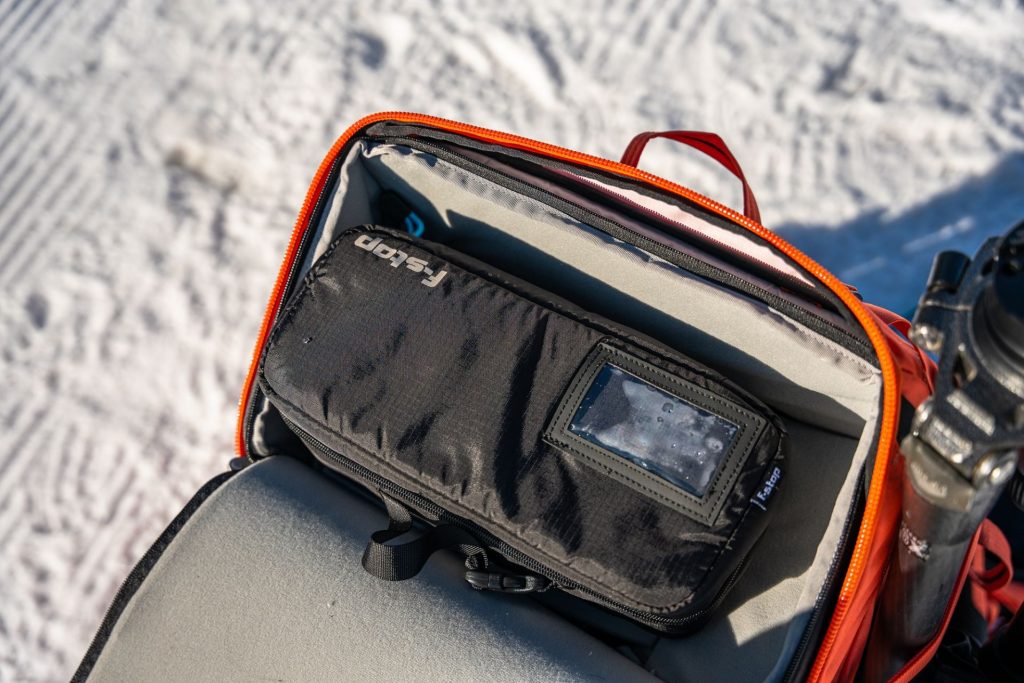
In addition to Master Cine ICU, I also carry Large Pro ICU separately. ICUs are good in the packs but on top of that, ICUs are also good as themselves. I pack some camping stuff in the Large Pro ICU and put it in the car separately. Compared to my previous packs it keeps me more organized and bigger space for gear, also different sizes of ICUs and the system of ICU itself helps me to customize the packing space as I need. Shinn is the backpack that you’re looking for those people who have lots of gear for big projects.
Discount Applied Successfully!
Your savings have been added to the cart.