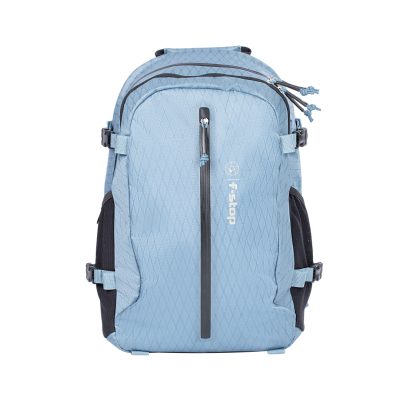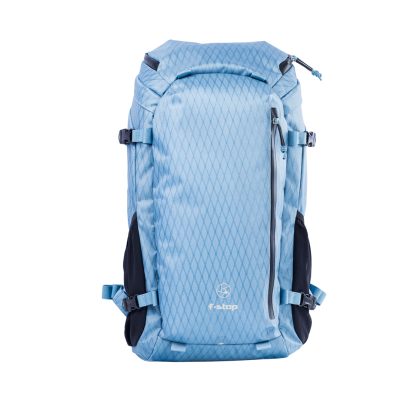
You’re three hours into a hike. You’ve got your kit—one body, three lenses, tripod, survival essentials—in the bag. The light is getting good. And your shoulders are screaming.
Sound familiar?
Outdoor storytellers carry significant extra weight that ordinary hikers or mountaineers don’t have to worry about. When you’re hauling your gear all day, staying comfortable becomes the difference between an inspiring shoot and a frustrating grind. The key to that comfort? Your backpack shoulder straps.
Take a look at any backpack you own now and check its straps. Are they shaped with an S-curve or J-curve? These two shapes feel different on the body, fit different torso geometries, and affect how load is transferred across your shoulders.
In this guide, we’ll break down what S and J straps are, which one fits your body, and what other strap features to look for when you’re choosing a heavy-duty backpack.
When you put on a loaded pack, your body has to bear that weight somewhere. A well-designed harness system distributes the load across three main areas:
Shoulder straps are where most of the early load transfer happens, especially on lighter daypacks without a hip belt. If your shoulder straps don’t fit the shape of your body well, the load sits in the wrong place. You get pressure points. The straps slide off your shoulders. Your neck and upper traps start compensating. By the time you’re setting up, your body is already fatigued.
The shape of your shoulder strap determines how well the strap follows the natural curve of your shoulder and chest. It’s one of the first fit decisions that matters, and it’s often made for you before you buy. So it’s worth understanding.
The names refer to the shape of the strap when you look at it on the pack:
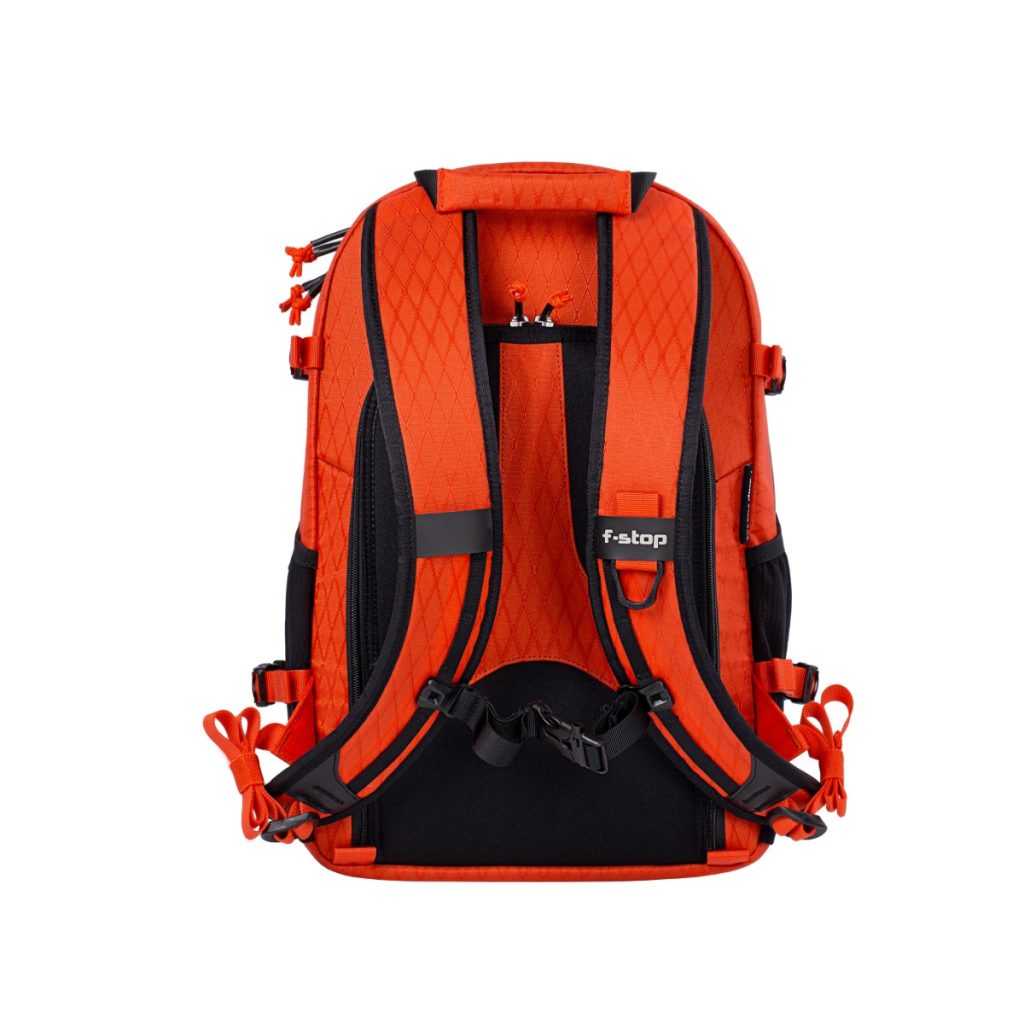
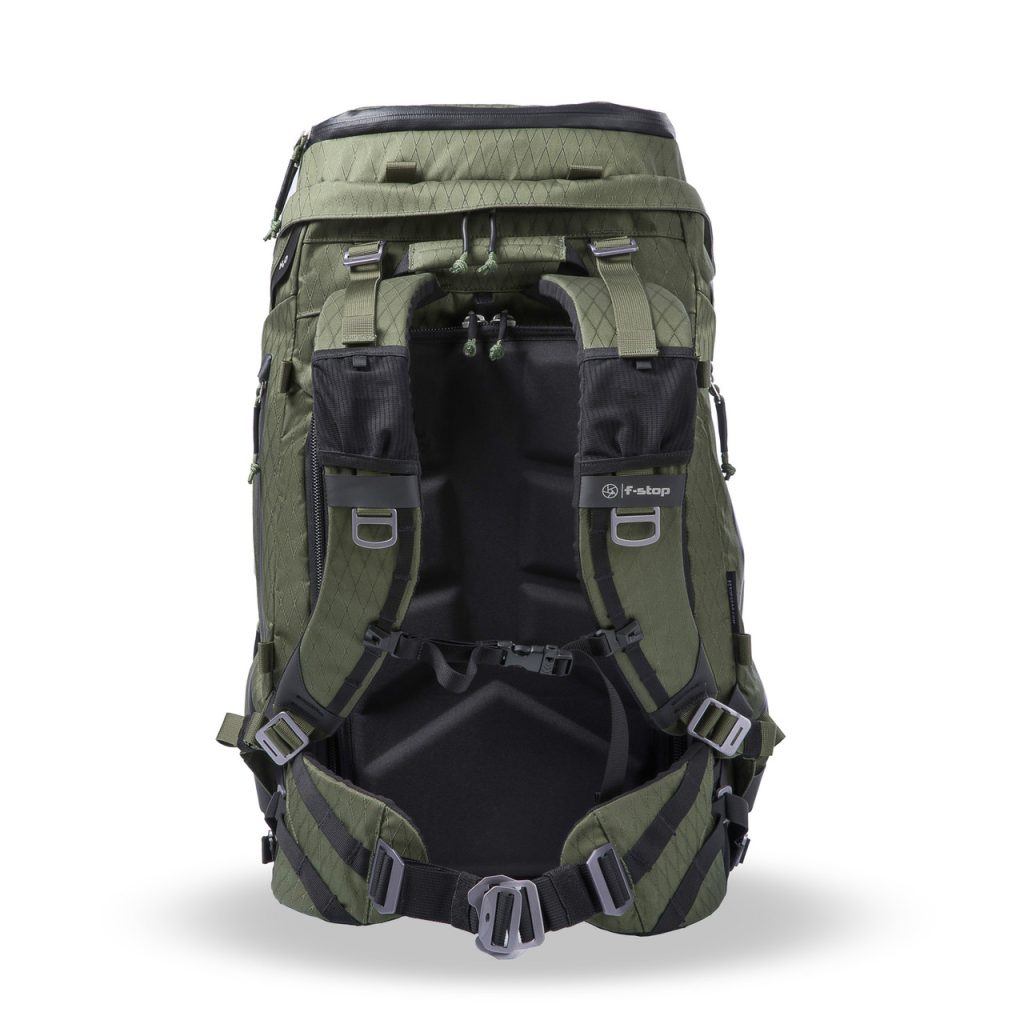
J-straps have a straighter profile. They travel in a relatively vertical line from the top of the shoulder, over the shoulder, and down the chest.
S-straps have a double curve — like the letter S. The upper curve sweeps the strap away from the collarbone and chest, while the lower curve wraps it back inward toward the waist and back.
On a body with a narrower torso or a flatter shoulder profile, J-straps often sit naturally and feel stable. On a body with sloped shoulders, a more pronounced bust, or a deeper chest, J-straps can dig into the collarbone or slide outward, while S-straps flow with those curves instead.
| J-strap | S-strap | |
|---|---|---|
| Shape | Straight to slight curve | Double S-curve |
| Best for | Narrower torsos, flatter shoulder profiles | Wider shoulders, more pronounced body contours |
| Fit concerns | Can dig into collarbone or slide off curved torsos | May fit awkwardly on a narrower, straighter torso |
| Often found on | Unisex or male-torso packs | Female-torso or anatomical-fit packs |
| Load path | Direct vertical transfer | Follows shoulder contour |
One important note: strap shape is about body size and proportions, not gender. While S-straps are often marketed with female-fit backpacks, many people with wider chests or more contoured torsos prefer S-straps regardless of how they identify. Others find J-straps perfectly comfortable across a wide range of body types. The best way to know is to try both.
A useful quick test: put on the pack, load it with something close to what you’d normally carry, and stand naturally. Look at where the strap sits at the top of your shoulder. There should be even, comfortable contact across the full strap surface — no gap between strap and shoulder, and no strap edge cutting into your neck. If the strap rolls outward or lifts away from your chest wall, that’s a sign the curve doesn’t match your body shape.
Before buying any pack, it helps to know your torso length. This is the measurement that determines where the shoulder harness sits relative to your hips — and it affects strap positioning just as much as strap shape. Use our Size & Fit Guide to measure yourself and match your dimensions to the right f-stop pack.
Strap shape is the starting point, but several other features determine whether you stay comfortable when the mileage starts to add up.
Strap width. Wider straps spread the load across a larger contact area, which reduces pressure on your shoulder. However, wide straps may slide off easily on narrower shoulders. Narrow straps concentrate weight—fine for light, short carries, but they’ll start to bite on longer ones.
Strap material. The material inside your shoulder strap affects two things: support and breathability. More padding isn't always better: Thick, soft padding feels great when you're trying it on, but can compress quickly under load and provide less actual support by the end of the day. What you want is padding that holds its shape under pressure—firm enough to stay supportive, with enough surface softness to stay comfortable. A thinner padding made from high-density foam can outperform a thick pad made from low-density material.
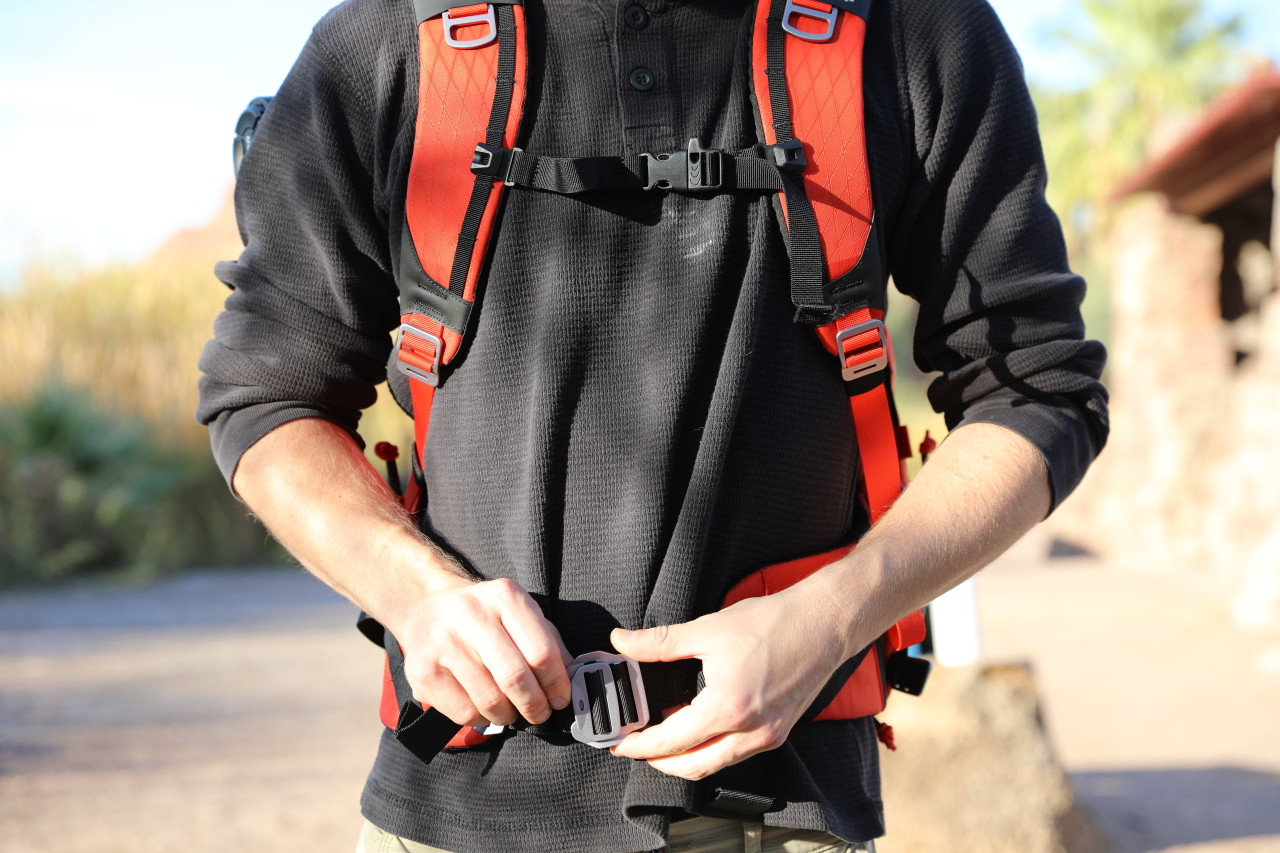
Sternum strap. The sternum strap is a horizontal strap that connects your two shoulder straps across your chest. This keeps the shoulder straps from spreading apart, maintaining the correct load path over your shoulders. Without a sternum strap, a loaded pack can pull the shoulder straps outward, especially on wider torsos. This reduces their ability to transfer weight efficiently and increases shoulder fatigue. Clipping the sternum strap brings everything back in line.
Load lifter straps. Load lifters are short straps that run from the top of the shoulder strap up to the top of the backpack’s back panel. Tightening them pulls the pack closer to your upper back and lifts some of the load off the lower part of the shoulder strap — transferring it higher up the harness system, closer to your center of gravity. Load lifter straps are more common on mid-to-large volume packs (all f-stop backpacks with a capacity of 28L and above).
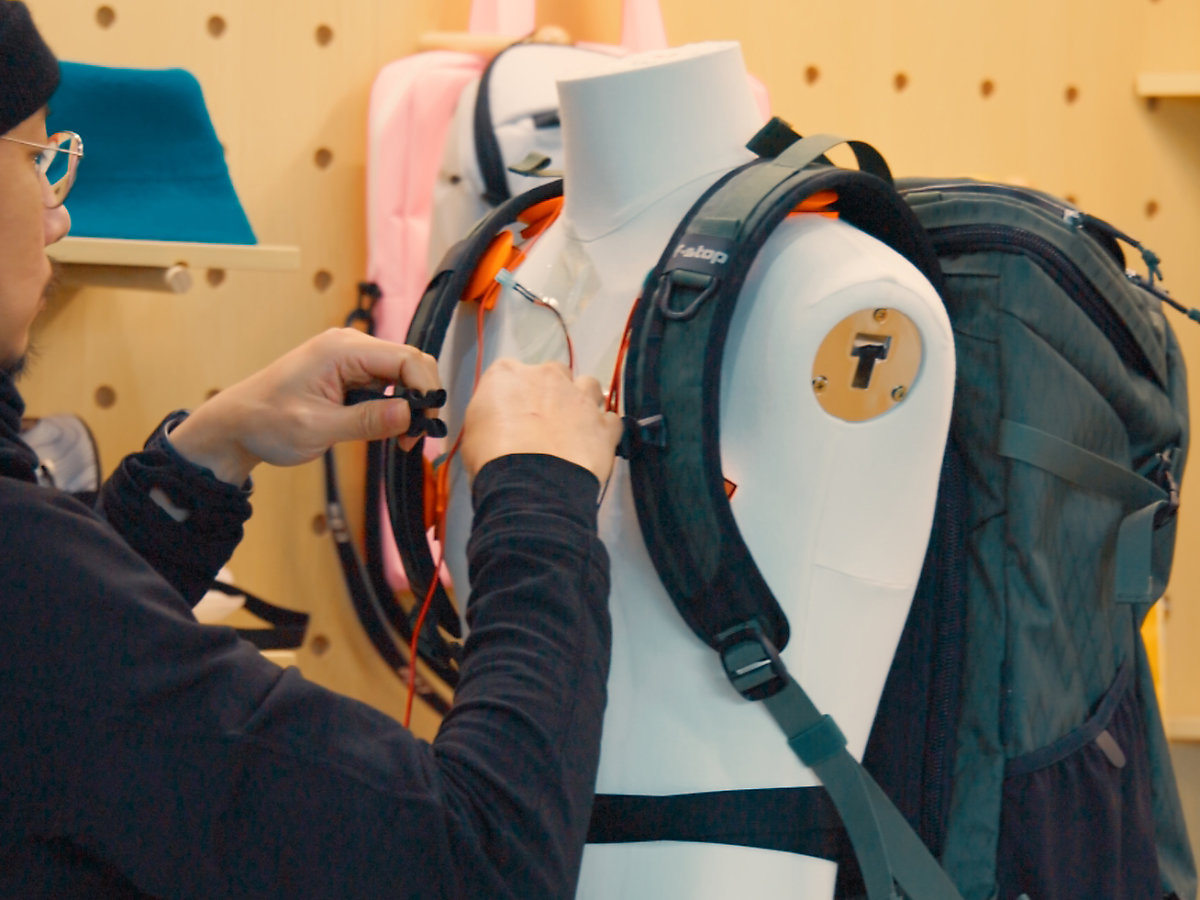
At f-stop, every strap system goes through serious field validation—not just product testing on a mannequin, but also across hundreds of real users in real conditions. The Guru 4 AIR, for example, went through 3,500+ hours of field validation across 245+ individuals before the final design was locked. While most backpack designers test for a generic load, we test for the specific reality of carrying camera gear: the weight distribution of bodies and lenses, the way you move when you’re scrambling to get into position for a shot, the heat buildup on a summer alpine hike, the strain of a long travel day through airports and then straight into the field.
We also don't follow typical J- or S-curve shapes for our shoulder straps. Instead, we're refining a hybrid curvature that's engineered to contour without over-rotating inward. That said, some of our AIR Series backpacks do feature Male and Female Torso fits—with subtle yet impactful differences in strap shape and fit.
S-strap or J-strap—neither one is universally better. The right one is the one that matches the shape of your body and the demands of how you carry.
If you’re narrow through the shoulders and chest, a J-strap may sit clean and comfortable without any fuss. If you’re wider or more contoured, an S-strap follows your body instead of fighting it. And once you’ve got the right shape, everything else—padding, sternum strap, load lifters—builds on that foundation.
The best gear is the gear you stop thinking about in the field. A well-fitted harness gets you there.
Discount Applied Successfully!
Your savings have been added to the cart.